Cliff Athens

Athens Newsletter May 2025

Dear Friends,

Since we began compiling this digest of local and statewide climate news in Georgia, we’ve both weathered storms and basked in the glow of progress. Cleantech has given us high hopes through high-paying jobs and economic growth across our state. At the same time, we’ve been deeply concerned about how climate change is affecting our ability to stay safe and thrive. 

We all agree that we need reliable, affordable energy, but our economic future also depends on a stable climate. We need to be clear-eyed about the risks if we want our wonderful Peach State to thrive. As a group of citizens concerned about the economic, health, and national security impacts of climate change, we hope to build consensus across the political spectrum about the urgent need to address it. We welcome your support and ideas. Please reach out to us!

Sincerely,
The C-Change Conversations Athens Team

Georgia News of Hope

Georgia’s clean-energy economy is booming – and our citizens are benefiting. The Georgia Chamber of Commerce and Chambers for Innovation & Clean Energy shared highlights from a new report, including the fact that 82,163 Georgians were employed in clean-energy jobs in 2024. In addition, clean-energy projects have generated $36.7 million in tax revenues and $23.6 million in income to farmers, ranchers, and private landowners. 

Georgia News of Concern

A spending bill supported by President Trump seeks to roll back federal clean-energy incentives from the Inflation Reduction Act (IRA). The bill, which is currently being debated in the Senate, could increase costs for consumers and harm Georgia’s electric vehicle and battery industries. 

Sea level rise is threatening one of the last surviving Gullah Geechee communities. Sunny day flooding has become increasingly common on Sapelo Island, where UGA researchers are exploring nature-based strategies to protect historic Hogg Hummock. Climate change is driving sea level rise everywhere, but a study using NOAA and NASA data found that sea levels along Georgia’s coast are rising at some of the fastest rates on Earth due to ocean circulation patterns and land subsidence.

Coastal Georgia is bracing for another hurricane season, which began on June 1 – and NOAA just predicted an above-average season with at least three to five major hurricanes. Research has shown that human-caused climate change is heating the water in the tropical region of the Atlantic where hurricanes form. Higher temperatures also produce wetter storms, as we observed with Hurricane Helene last fall. UGA estimates that Helene caused $5.5 billion in damage to Georgia’s agriculture and forestry industries.

Ways to Act

Georgians will finally have the opportunity to vote for two Public Service Commissioners after a three-year delay caused by legal battles over the fairness of statewide voting. This is the only statewide race in Georgia this year. The Public Service Commission (PSC) is the state’s top utilities regulator. Its five commissioners set the rates for our electricity, gas, and internet. The PSC is also responsible for long-term energy infrastructure planning in Georgia, so it determines whether the state moves toward cleaner energy sources or remains reliant on fossil fuels.

For PSC District 2 (East and Southeast Georgia), Republican incumbent Tim Echols is facing a primary challenge from Lee Muns. In the Democratic primary, Alicia Johnson is running unopposed.

For District 3 (DeKalb, Clayton, and Fulton counties) Democrats Peter HubbardRobert JonesKeisha Sean Waites, and David Blackman will face off in their primary. (David Blackman’s eligibility has been challenged. The ruling of a pending hearing on this matter may affect if votes cast for him will be counted.) If needed, a primary runoff will be held July 15. The winner will face Republican incumbent Fitz Johnson on Nov. 4.

Most of these candidates recently participated in a non-partisan forum, where they discussed their backgrounds and answered policy questions from constituents.

All registered Georgia voters are eligible to vote for both Public Service Commission races on the ballot. Early voting began on May 27 and will continue until June 13. Primary election day is on June 17. More information on when and where you can vote can be found on the Georgia Secretary of State’s website

The Big Picture: U.S. and Global Climate News

When you drive near a cliff’s edge at night, do you turn off your lights and hit the accelerator?

Sounds reckless and frightening, but that’s what we are about to do.

This cliff is climate change, a descent to an increasingly inhospitable world that will bring pain and financial damage. Just at the time when we should be most cautious, the administration is “turning off the lights” by shutting down the science that illuminates the dangers and gives us critical information to prepare for or avoid the damages ahead. At the same time, federal departments and agencies are increasing our speed toward danger by deregulating greenhouse gas emissions and by rolling back clean energy.

It doesn’t make sense – economically or politically. It’s one thing to deny climate change when it is in the far-off future; it’s another thing when it is impacting constituents’ pocketbooks and safety right now. Especially when, in contrast, the clean-energy transition holds so much promise for economic gain.

Let’s get away from hyperbole and focus on the key facts:

Climate change is inflationary. It is driving up the costs of food, insurance, infrastructure, health care, and energy.

Climate change is disruptive. Human productivity declines as heat increases, and more  frequent natural disasters endanger supply chains, manufacturing centers, and markets. 

Climate change policy, now threatened by the administration, benefited red and blue states alike across the nation and was successfully reshoring manufacturing and creating jobs and economic opportunity – with most of the investment in red-leaning districts.

Electricity demand is exploding due to AI, data centers, and electrification. Fossil fuels cannot meet the moment – natural gas plants have tripled in cost since 2022 and face severe supply chain shortages, limiting significant expansion until 2030. They are predicted to handle only 16% of the increased load. Disinvesting from renewables, which are now cheaper, more stable, and quicker to build, will make it more difficult to meet that demand.

Pretending dangers don’t exist won’t make us safer. Thwarting new technology that can provide cleaner, cheaper, safer energy won’t make us richer. 

It’s up to us – conservatives and liberals alike – to demand that the headlights get turned back on, that we slow our trajectory toward the edge, and that our government is working to ensure our economic future, not venerating our economic past.

Notable Quote

“The [administration’s] decision [to say the costs to the economy from climate change is zero] is like Alice in Wonderland’s Humpty Dumpty, who said ‘Words can mean whatever I choose them to mean.’ So, yes, it is possible to have policies that assume climate change will have no impacts, but that does not make it so.”

— Michael Greenstone, an economist at the University of Chicago

News of Concern

The Trump administration’s retreat from climate action is markedly out of step with the rest of the world and doesn’t jibe with the majority of Americans, who are embracing clean energy as critically necessary. Yet it is plowing ahead with policies that will drive up costs and make us collectively less safe. In the past month, the federal government:

These moves are happening at a fraught time, when the Federal Energy Regulatory Commission (FERC) warns that the looming summer heat and our increased power demand will cause significant strain on our grid, a network that is rickety at best. We have plenty of energy waiting in the queue to get on the grid (more than double our current generation capacity) if we could speed up permitting and expand transmission. That said, almost all of it – 95% – is in renewables and batteries, energy forms the administration does not favor.

It’s not only blackouts we have to worry about. Our electricity costs are rising because utilities are spending billions to harden their energy networks from more ferocious and frequent natural disasters. In a one-two punch, demand is also rising rapidly, fueled primarily by the insatiable hunger of AI and data centers – and ratepayers will be on the hook for much of the cost. One of the best ways to mitigate these increases? You guessed it:  the faster we move toward renewables, the faster and more we will save, according to the venerable International Energy Agency (IEA).

It’s important to realize that we have to upgrade our grid no matter what type of energy we support. As we saw from the recent widespread outage in the New Orleans area (which uses renewables for just 2% of its power generation) and the colossal blackouts in Spain and Portugal (which were using clean energy for 69% for their power generation), traditional grid-management techniques are not up to the task. We have developed new tools to balance and optimize our grids – if we prioritize and invest in them.

There’s one more concern we’d like to share before moving on to the greener pastures. Despite pledges by dozens of countries to end deforestation, the world lost a Panama-sized swath of tropical forest last year. Tropical forests absorb a lot of carbon: losing them will make it harder to stay at safe temperature levels. Experts call it a wake-up call – but are we listening?

News of Hope

In a world of unintended consequences and irony, the president’s actions on tariffs – coupled by OPEC’s response – are creating headwinds for domestic oil and gas production, despite his avowed goal to boost fossil fuels. It’s a reminder that oil and gas are impacted by global markets and that they are much more volatile than homegrown renewable energy. In fact, oil prices are so low that producers are hesitating to explore and drill, and drillers are warning we may have reached “peak shale” domestically.
  
More good news? For the first time in modern history, China’s annual CO2 emissions appear to be trending downward, even as its economy and energy usage is growing. This decline is driven by its huge pivot toward clean energy. As the world’s largest greenhouse gas emitter (China still depends on coal for much of its energy), this is critically important, and has happened much more quickly than experts expected.
 
Back home, we have only to look at Texas to see how effective renewables are in powering the grid. The Lone Star State is a prime example of how solar and wind not only can keep the power on during extended heat waves, it is a model of how rural areas can benefit economically from a “crop” that is easy to raise. Texas businesses are investing in renewables not because they are anti-carbon or green, but because they are good for the bottom line. And ratepayers seem to agree as legislation that would have restricted renewables (and raised electricity rates) appears to be dead in the GOP-led state House of Representatives – and legislation supporting rooftop solar appears to have passed.
 
The administration has cherry-picked one form of clean energy – and it’s one that the Biden White House also favored. President Trump has declared that nuclear power will play an important role in our energy future. While we fervently hope that safety isn’t sacrificed as projects are fast-tracked, new nuclear designs do hold a great deal of promise. It’s particularly timely as China races toward becoming the world leader in nuclear energy, with 55 reactors built and 23 more in the works. The U.S., by comparison, has 94 reactors – but it took us 40 years to build what China has done in 10 years.
 
In another positive turn, the administration has lifted its ban on the major New York offshore wind project that is a critical part of the state meeting its clean-energy standards. It’s too soon to say if this about-face signifies a softening of Trump’s resistance to wind, but 17 states and the District of Columbia filed lawsuits in May against the administration to try to move forward with a multitude of wind projects around the country.
 
In another clean-energy win, schools from Utah and Kentucky to Massachusetts have been able to use IRA tax credits to switch to geothermal energy to heat and cool their facilities. Geothermal is more expensive upfront, but once built provides cooling and heating three to four times more cheaply than using fossil fuels. Geothermal energy can power schools safely and for much less money, freeing up funds for salaries and facility upgrades. 
 
And we were bolstered to learn that voices against clean energy in the United States are being met with some resistance internationally. Despite U.S. pressure, the heads of the central banks and regulators that make up the Basel Committee on Banking Supervision rejected a proposal to dissolve a task force overseeing climate work, stressing the importance of addressing the financial dangers we face as temperatures rise.
 
Finally, this series on clean-energy jobs in rural America just warms our hearts. These tales of how real people are benefiting from the energy transition show the power of clean technology – not just in keeping our lights on, but in helping our neighbors and communities grow and thrive. Pour a cup of tea and enjoy.


Read More
waterfall360

March 2025

Dear Friends,

During our presentation tour in Virginia this month, I was struck by a growing sense of unease. There is a dawning recognition that weather patterns are indeed changing, and while we may not want to put a label on it, we know something monumental – the normal rhythms and patterns that have been etched into our lives over decades – has shifted.

In a state known for lush forest and misty mountain passes, audiences spoke of the increasing severity of drought and water shortages (and whether enough people are putting buckets in their showers to capture and reuse the water in their gardens). They spoke of hardening homes against wildfires by replacing foundation plants with hardscaping. They lamented the high cost of rebuilding the many roads and bridges destroyed by Hurricane Helene’s historic flooding.

I also sensed a growing hunger for what we offer: a chance to learn about a difficult issue in a nonpartisan, non-confrontational manner that educates without polemics or hysteria. People value our approach – we were even asked by conservatives who voted Republican to take our presentation to President Trump and Elon Musk. Our audiences’ appreciation, plus their desire to share our presentation more widely with others, makes the long hours and miles traveled feel worth it.

Small steps. Big impact.

Thanks for being on this journey with us!

Kathleen Biggins
Founder and President


2025 Benefit: Staying Healthy in a Climate-Changed World

The changing climate is impacting our health – what can we do to stay well? On April 24, we’ll come together in Princeton, NJ, to hear renowned climate and health expert Jay Lemery, M.D., talk about what lies ahead, what the medical community is doing to prepare, and what you can do to protect yourself and your family. This event will be a benefit to support C-Change Conversations. 
Dr. Lemery holds the Climate & Health Foundation endowed chair in climate medicine and is a professor of emergency medicine at the University of Colorado School of Medicine. He is the co-author of Enviromedics: The Impact of Climate Change on Human Health.

C-Change Conversations is also partnering with Penn Medicine to offer a separate panel discussion on climate and health with Dr. Lemery in the Philadelphia area. That presentation will be geared to medical professionals.

The April benefit is open to all and will be held from 6-8:30 p.m. at Stuart Country Day School in Princeton. A social hour with tapas and a light bar will precede the presentation. To purchase tickets, click here.
Welcome Our Newest Strategic Advisor, Karen Florini

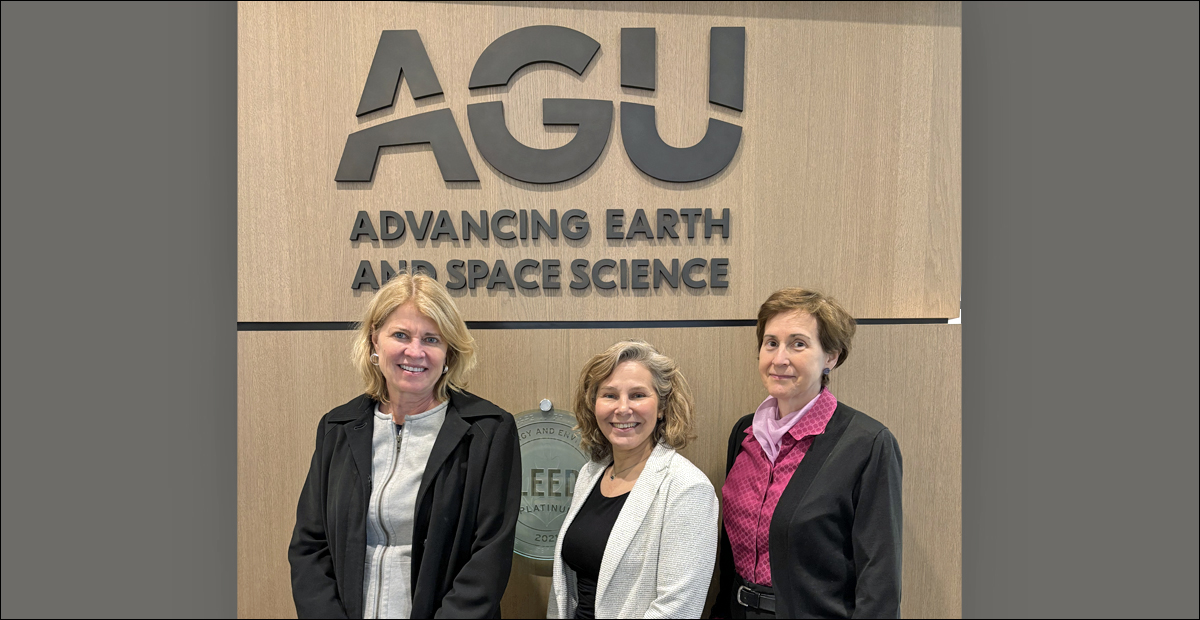
From left: Kathleen Biggins, Lexi Shultz (vice president of science policy and government relations at American Geophysical Union), and Karen Florini

We are so pleased to introduce Karen Florini as our newest strategic advisor. A longtime C-Change supporter, Karen most recently held multiple leadership roles at Climate Central. Previously, she served as deputy special envoy for climate change at the State Department after spending more than two decades at the Environmental Defense Fund, where she worked on environmental health and on climate change. She earned a law degree at Harvard (but now regards herself as a recovering lawyer).

Karen has hit the ground running, connecting C-Change with climate experts in the Washington, D.C., area to help us refine our communications and expand our outreach. Earlier this month, for example, she facilitated a presentation for us at the American Geophysical Union (their net-zero building blew us away with its technology and innovative architecture). These opportunities provide valuable insights that will strenthen our message.

In addition to bringing aboard those connections and her own expertise in policy, Karen is joining our roster as a C-Change presenter. She’ll kick off at the end of March by presenting the Primer at the Garden Club of America’s National Affairs & Legislative Meeting, an annual event attended by about 300 GCA members as well as national and state legislators from around the country.

We’re so grateful to have you as part of the team, Karen!

C-Change in the News

From print to podcast, C-Change was featured in some exciting ways this year so far. In February, we were a “Katie Couric Media” headline article! The “Ripple Effect” newsletter piece took a look back at the origins of C-Change and how our nonpartisan messaging continues to resonate with audiences. If you missed it, you can find it here.

And it was so fun to listen in when Kathleen Biggins was featured on “Second Act Stories,” a podcast that tells the tales of people who have made “major career changes to pursue more rewarding lives in a second act.” Co-host Andy Levine interviewed Kathleen for a great conversation about climate concerns, engaging diverse audiences, and the power of finding a new and unexpected personal journey. You can listen here.

A Blog from the EcoRight

To give us insight on how some Republican leaders view energy policy and the transition, we asked Bob Inglis, the executive director of republicEn.org, to write a blog for us. RepublicEn.org is a prominent leader of the burgeoning EcoRight, a growing movement among conservatives who “believe in the power of American free enterprise and innovation to solve climate change.” We think Bob’s take on clean energy policies is illuminating and worth sharing.

Kathleen Biggins Hits the Road

Members of the Garden Club of Winchester (VA) with Kathleen Biggins (third from left) and Karen Florini (left)

Kathleen kicked off 2025 with a presentation to an “old friend” – the Garden Club of America! Specifically, the Zone Conservation Leaders of NJ Garden Clubs asked her to present a Zoom talk on emerging climate trends.

In March, Kathleen hit the road for Washington, D.C. (as mentioned above) and multiple events in Virginia. More than 150 people attended our events, which included presentations to the Garden Club of Winchester and the Rivanna Garden Club in Charlottesville, as well as public talks at the State Arboretum of Virginia and Shenandoah University, which was hosted by professors of environmental science and business.

Dallas Hetherington Headlines Presentations

Dallas Hetherington had a busy start to 2025. On January 30, he delivered the Health Primer as the keynote address for the “2025 Mid-Atlantic Regional Convening: Increasingly Severe Weather Preparedness Conference” at Drexel University in Philadelphia. About 60 people – including the media – attended the keynote session.
 
Earlier in January, Dallas presented the General Risk Primer to about 40 people at the Princeton (NJ) Windrows community. His presentation was so well received that he has been invited back to present the Health Primer later this year. You continue to wow us all, Dallas!

Molly Jones Offers Climate Career Guidance at Princeton

On January 23, C-Change’s chief operating officer Molly Jones participated in “Careers in Cleantech,” a program for Princeton University students. Organized by C-Change supporter and Princeton alum Tom Leyden, this panel discussion encouraged students to devote their talents to solving our climate challenges, with a particular emphasis on energy. Molly’s presentation focused on community-level examples of energy policy in action and the importance of looking at climate change as an economic issue rather than an environmental one. Kudos, Molly!

Latest “B-Change” Blog: Eat Less Beef

Did you know that decreasing the number of times you eat beef in a week – even by one meal – can help solve climate change? Our latest “B-Change” blog by Karen Dougherty takes a look at why you may want to consider making this shift in your diet. If you missed it, or if you want to share it with friends and family, you can read it here.
C-Change Athens Making Community Strides

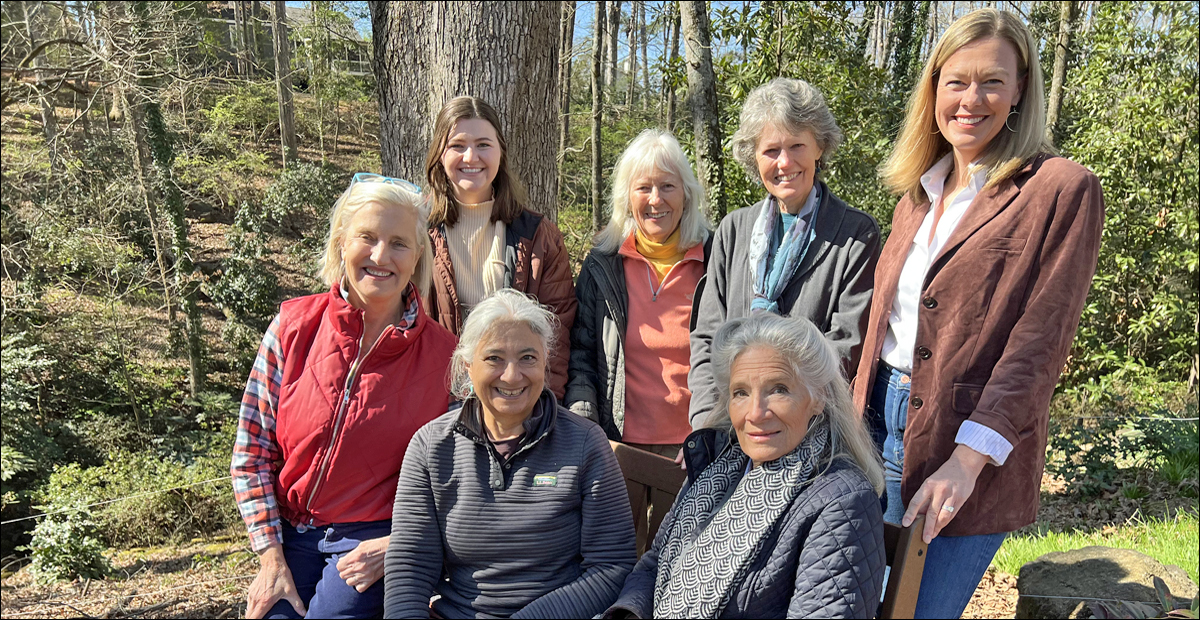
The C-Change Athens team, from top left: Ellie Pennybacker, Lili Outz, Nancy Stangle, and Ramsey Nix. From bottom left: Sally Coenen, Helen Kuykendall, and Valerie Aldridge

C-Change affiliates are learning and advocating in Georgia! Several affiliates addressed the Athens-Clarke County mayor and commission during its February meeting to advocate for the establishment of a task force to support the county’s 100% Clean and Renewable Energy Plan.

The team is working with the Athens Area Community Foundation to establish a Clean Energy Fund to support projects and initiatives that promote renewable energy, energy efficiency, and climate resilience. In addition, several members participated in “Engaging in the 2025 Georgia Power Integrated Resource Plan” training program offered by Southface and Georgia Interfaith Power & Light. The six training sessions helped them understand the utility’s long-term planning process and how citizens can advocate for increased renewable energy.

Sally Coenen worked with Georgia House Representative Spencer Frye’s staff to introduce a climate-related bill that would encourage renewable energy, regulate energy providers, and fund renewable energy projects. The bill is now in committee for review. Sally was also invited to join a small group of local climate leaders to seek out grant opportunities.

As co-chair of the Sustainability Advisory Committee for the Clarke County School District, Ramsey Nix helped create a plan to help the district implement renewable energy and green infrastructure, minimize waste, and reduce its carbon footprint. Ramsey will present the plan to the Board of Education in April.

Upcoming Events

April 7-8, Asheville, NC:

  • The Ramble Biltmore Forest
  • French Broad River Garden Club (public event)

April 9-10, Charlotte, NC:

  • St. Peter’s Catholic Church
  • Women in Business
  • International Women’s Forum Carolinas

April 17, New York City, NY: New York Junior League (public event)
 
May 15, Philadelphia, PA: Panel discussion at ImpactPHL Total Impact Summit ‘25

Read More
columbia-masthead

Athens Newsletter – February 2025

Dear Friends,

It has been two years since C-Change Conversations Athens began compiling this digest of local and statewide climate news in Georgia. It has been an exhilarating time. Clean tech has exploded, bringing high-paying jobs and economic growth to our state, bringing us hope. At the same time, we’ve also shared concerning news about how climate change is affecting our state.

We all agree that we need reliable, affordable energy. But our economic future also depends on a stable climate and we need to be clear-eyed about the risks if we want our wonderful Peach State to thrive. As a group of citizens concerned about the economic, health, and national security impacts of climate change, we hope to build consensus across the political spectrum about the urgent need to address it. We welcome your support and would love to hear from you.

We welcome questions and ideas. Please reach out to us!

Sincerely,
The C-Change Conversations Athens Team

News of Concern

Data centers are straining the power grid, and Georgia Power projects they could triple the state’s energy consumption over the next decade. In response, Georgia Power, the state’s largest utility provider, intends to grow its grid by 50% by 2030. That increased capacity will come from more renewable energy and upgrades to aging nuclear units and hydropower dams, but it also keeps two of the country’s largest coal power stations running past their planned retirements and expands methane gas production. Burning coal contributes more pollution than other fossil fuels and it is less efficient. The Public Service Commission will vote on Georgia Power’s Integrated Resource Plan (IRP) on July 15 after months of public hearings. (For more information about how to weigh in, please keep reading below under “Ways to Act.”)

Many clean energy projects in Georgia are on hold after President Trump’s order to freeze federal funding. Among the projects affected are at least $1 billion worth of upgrades to Georgia’s electric grid, EV charging, and battery installations in Athens, and clean energy workforce training in Norcross. The funding remains frozen despite two federal judges’ rulings that it be released. Georgia has been a magnet for clean domestic energy technologies since the passage of the Inflation Reduction Act. Seeking the law’s generous tax credits, manufacturing companies that supply batteries, electric cars, and solar cells have flocked to the state. The future of the law is now unclear.

Climate change is helping to drive up car insurance costs in Georgia. The rates climbed by 21% last year, according to a report by Insurify, in part because of “significant losses from severe weather events.” For example, an estimated 16,800 vehicles in Georgia were damaged during Hurricane Helene.

Ways To Act

You can ask the Georgia Public Service Commission to prioritize investments in clean, renewable energy production, battery storage, and energy efficiency programs during its public hearings about Georgia Power’s 2025 IRP on March 25–28, May 27–30, and June 23–25 (9:30-10:30 a.m. in Room 110, 244 Washington Street, Atlanta). You can also submit public comments through the online portal.

In recent weeks, the Georgia General Assembly passed legislation (SB 34) that would force Georgia Power to charge data centers for the cost of the energy infrastructure they require. In addition, a bipartisan group of legislators has introduced the Georgia Homegrown Solar Act of 2025 (SB 203) that would allow Georgia Power customers to buy a portion of their energy from a nearby solar farm instead of installing solar panels on their own roofs. This could lower energy costs for customers and help Georgia transition to clean energy. Please consider calling your state senator to ask them to support SB 34 and SB 203.

The Okefenokee Swamp is Georgia’s largest carbon sink. Mining Trail Ridge would drain peat beds on the east side of the swamp and release an estimated 86 million metric tons of carbon dioxide. Take action to support House Bill 561 to prevent future mining on Trail Ridge and House Bill 562, a five-year moratorium to prohibit mining permits in the Okefenokee. And remind legislators that 92% of voters support protecting the Okefenokee National Wildlife Refuge and its wildlife.

Wade Davis, University of British Columbia professor of anthropology and the BC leadership chair in cultures and ecosystems at risk, will give the 2025 Odum Environmental Ethics Lecture as part of UGA’s third annual Humanities Festival. Davis’s talk is based on his 2009 book The Wayfinders: Why Ancient Wisdom Matters in the Modern World. This free lecture will take place on April 2.

The Big Picture: U.S. and Global Climate News

What’s more important? Political fervor or economic reality? Culture war rhetoric or constituents’ wellbeing? We are about to find out.

The new administration is moving at breathtaking speed to bolster fossil fuels, roll back federal policies and departments, and blunt the clean-tech transformation. Fortunately, the transition is happening on such a big scale and on so many different levels – globally, locally, and increasingly individually – that this gumming up of the process cannot stop it. Unfortunately, these reversals in national support will slow down the transition, drive up energy costs, and handicap the United States in the new-energy race.

Let’s cut to the chase: we need an affordable, reliable, and safe energy system. Historically, fossil fuels have been our only choice, and they still provide almost 80% of our energy in the United States. But the new kids on the block (wind, solar, and batteries) are now outcompeting them, providing much cleaner energy that, when coupled together, can be pretty darn reliable and handle increasingly larger parts of the load – all at a much cheaper price. That’s why in 2025, 93% of new power generation in the U.S. is expected from wind, solar, and batteries, while only 7% from natural gas, and none from coal.

While renewables aren’t perfect, their economic advantage is causing a tsunami within the energy sector. The stark reality is that we need this record-breaking growth to continue, in part because renewables are so much quicker to bring online than new natural gas or nuclear that they can more immediately meet the burgeoning power demand for AI and electrification. Other forms of clean technologies, like new nuclear and long-term storage, hold great promise – and need policy support as well. Tellingly, our economic nemesis, China, continues to provide aggressive policy support and investment to dominate these new technologies, spending more than the U.S., UK, and EU combined last year.

Another economic reality? The clean-tech transition has reshored manufacturing jobs and created investment opportunities across the United States, attracting $1 trillion in investment. Importantly from a political perspective, 60% of projects and 85% of dollars are in conservative districts. 

In the short run, the administration’s moves may score with the political base. But in the long run, they cause economic pain for all of us – squelching job growth, driving up energy costs, hampering reliability as demand is soaring, and exposing all of us to higher costs from climate impacts. Political fervor or economic reality? The winner of this race sets the pace for our future.

Notable Quote

“As Republicans, we should take a thoughtful approach and seek to refine and improve the IRA’s energy provisions in a way that promotes market certainty and continues to incentivize a comprehensive energy strategy. As a surgeon I would say, use a scalpel, not a sledgehammer.”

– Congresswoman (IA) Mariannette Miller-Meeks, Conservative Climate Caucus chair

News of Concern

Local jobs and growth are the most important drivers of any administration’s success, which is why the pushback against clean tech is such a lose-lose scenario. Red states – including Georgia, North Carolina, Montana, and Nevada – actually have the most to lose from the administration’s federal funding freeze on clean energy. The private investment bonanza and “once-in-a-generation manufacturing boom” promised to workers in these states is in jeopardy. Where is the economic sense in that? 

This energy policy whirlwind has been set against the backdrop of the hottest January on record across the globe – except in the U.S., where a polar vortex is misbehaving and plunged most of the nation into a deep freeze (except Alaska, which experienced record highs). Our heads are spinning – global warming could perversely be causing extreme cold as well as extreme heat, and a growing body of research predicts this pattern could worsen in a warming world.

It’s only going to get worse as it gets warmer. The administration’s proposed cuts to FEMA will mean fewer dollars in aid when weather-related disasters occur – and these disasters tend to happen more in Republican states, which get more relief funding than Democratic states. Again we ask: which is more important – politics or economics?

Saying it isn’t real doesn’t keep you safe. In West Virginia, only 57% of residents believe climate change is happening but experts say the devastating flooding the state experienced in February was made more extreme by warming temperatures, and that it is likely to happen again. On the federal level, the new administration has changed policy to enable roads, bridges, and federal buildings to be built without factoring in the new threats from climate change, putting billions of infrastructure dollars at risk. We can’t make ourselves safer unless we accept the realities and plan for them.

What do we gain through the scuttling of offshore wind projects, when costs have come down so fast and job opportunities have supported so many people in (again) primarily Republican districts? What gains will balance out the $1 billion that taxpayers will lose from the shut down of EV chargers on federal property?


One last note before moving on to more hopeful news: we are worried about chocolate in our warming world. Last year, 71% of cocoa-growing regions in West Africa were threatened as they experienced six extra weeks of extreme heat (above 89.6°F). Can you imagine Valentine’s month without chocolate? Heartbreaking.

News of Hope

Fortunately, while the administration pulls back on the reins of climate action, the rest of the world is spurring it on. Leaders of almost every country are pushing forward on climate goals. Leaders of most faiths are rallying as “good stewards of the Earth.” Philanthropies are pledging continued support for climate action. And states – even conservative ones – are staying the course toward net-zero. Because they can all see the economic pain of failure and the gain of successfully transitioning to a lower-carbon economy. 

Those gains are spurring global investment in our low-carbon energy transition – to the tune of more than $2 trillion for the first time last year. Even the Middle East is transitioning as major solar projects are on track to make renewables 30% of total capacity in five years in seven countries. There’s simply no denying – even by oil-rich countries like the UAE and Saudi Arabia – that renewable energy makes financial sense.

Back home, simpler transitions – how we heat and cool our homes, for example – are gaining traction. Heat pump sales are soaring as we realize that turning to cleaner energy doesn’t have to mean sacrificing comfort or convenience. Heat pumps are simply more efficient and less polluting than fossil fuel furnaces, so they just make more sense.

Energy innovation continually astounds us, and here’s one project that caught our fancy. JetWind Power is using windmills to harness the air turbulence created by jets as they land and take off and using it to power nearby car chargers. These are the ideas that bring us hope when times feel tough. If we think it, we can do it – and we’re truly thankful for all of the minds that are pushing the boundaries to create climate solutions. 

Notable Graphic

Whether you tune in for the game, the commercials, or the munchies, the Super Bowl is a big event in the United States – and climate change is becoming a player. This graphic shows how much warmer Super Bowl Sunday has become since 1970. And in fact, all 30 NFL cities are seeing two weeks more of extremely hot days, which imperils the health of the players as well as our joy in the game.

Notable Video

If you were watching the Super Bowl, you might have caught this compelling ad about the importance of climate action. Created by Science Moms, a nonpartisan group of mothers who are also climate scientists, the commercial is a touching plea for all to recognize how climate change will impact our children’s health and future. We were moved and thrilled to see a climate change message on such a national platform.

Read More
Spring Benefit 2025 front copy 250

Staying Healthy in a Climate-Changed World


The changing climate is impacting our health.
How can we stay well?

Join C-Change Conversations and renowned climate and health expert

Dr. Jay Lemery, M.D.

for an in-depth discussion about the challenges that lie ahead, how the medical community is preparing,
and what you can do to protect yourself and you family from the risks.

Thursday, April 24, 6-8:30
Tapas and bar provided

Stuart Country Day School
1200 Stuart Road, Princeton, NJ

PURCHASE TICKETS BY APRIL 17 HERE

Dr. Lemery is the Climate & Health Foundation Endowed Chair in Climate Medicine and Professor of Emergency Medicine, University of Colorado School of Medicine.
Read More
Press 250

Climate Change is Not a Liberal Issue.

Augusta Free Press Interviews expert Kathleen Biggins.

Read More
MoquisThumb

Diseases Are Spreading

To learn more, click on the post.

Read More
Sign Up for News!