



Reframing the Climate Conversation
It can be tough to talk with skeptics about climate change, even when (sometimes especially when) they’re your friends and family. On a recent episode of the “Future of Sustainability” podcast (you can listen here), host Michael Hanf interviewed C-Change Conversations Founder and President Kathleen Biggins about strategies for productive communication that gets past partisanship to build consensus. In addition to the podcast, “Future of Sustainability” wrote the following blog about C-Change’s approach.
Reframing the Climate Conversation
for Consensus and Action

The Future of Sustainability
November 4, 2025
When Kathleen Biggins founded C-Change Conversations in 2014, she was not aiming to build a traditional environmental nonprofit. Instead, she set out to bridge one of the deepest divides in American public discourse: climate change. What began as a group of volunteers worried about the lack of informed dialogue has evolved into a respected organization that has reached more than 23,000 people across 33 states and beyond, equipping communities with a science-based but accessible framework for understanding climate risk.
November 4, 2025
When Kathleen Biggins founded C-Change Conversations in 2014, she was not aiming to build a traditional environmental nonprofit. Instead, she set out to bridge one of the deepest divides in American public discourse: climate change. What began as a group of volunteers worried about the lack of informed dialogue has evolved into a respected organization that has reached more than 23,000 people across 33 states and beyond, equipping communities with a science-based but accessible framework for understanding climate risk.
Biggins’ central insight is deceptively simple: climate change is not just an environmental issue. It is a risk-management challenge that affects health, household budgets, business competitiveness, and national security. By shifting the narrative from polar bears and politics to economics and everyday life, C-Change Conversations has carved out a distinctive and effective role in the crowded climate communication space.
A Taboo Topic Made Tangible
In the early days, Biggins and her colleagues confronted a cultural barrier as much as a scientific one. “It wasn’t welcome discussion at dinner parties or even at lunches,” she recalls. “It was really something that was a little bit taboo to bring up.” Yet the risks were too significant to ignore. From rising insurance costs to food price volatility, climate impacts were already shaping households and markets.
The organization’s flagship program, the C-Change Primer, was designed to break through this silence. Structured like a risk assessment, the presentation asks audiences to consider three questions:
- How likely is the risk?
- What are the consequences if it happens?
- How difficult or costly is it to avoid?
By applying this framework, familiar to business leaders, investors, and policymakers alike, C-Change reframes climate change as a practical challenge that demands rational analysis rather than ideological positioning.
Meeting People Where They Are
Biggins emphasizes that different audiences connect with different aspects of the issue. For investors, the conversation often centers on stranded assets, shifting competitiveness, and insurance exposure. For civic groups, the focus may be on family health, household budgets, or community safety. “For some audiences, it’s their family’s safety and household pocketbook issues. For others, it is the big economy and competitiveness,” Biggins explains.
The method is deliberately apolitical. Instead of moralizing or prescribing specific policy solutions, C-Change provides credible data, local projections, and economic analysis, then leaves space for dialogue. This neutral ground has proven especially powerful in conservative communities, where skepticism can be high but concern for children’s futures, jobs, and national security resonates across party lines.
From Division to Dialogue
Perhaps the most striking element of C-Change’s approach is its commitment to respectful engagement. Biggins recalls one event in rural Virginia where a local resident approached her before she spoke, declaring that climate change was a hoax. Rather than dismissing him, she offered ten minutes for him to present his view. “My inclination was to treat him with respect and kindness and then do my thing,” she says. The result: the audience heard both perspectives, but also received a fact-checked, science-based framework that invited them to reflect rather than react defensively.
This approach reflects Biggins’ broader philosophy: the goal is not to win arguments, but to open doors. By focusing on risk, stewardship, and tangible local impacts, C-Change seeks to build the social will that can ultimately unlock political will.
Agency Over Apathy
One of the greatest challenges in climate communication is overcoming paralysis. People may accept the science but feel powerless to make a difference. To counter this, C-Change highlights local and personal actions, ranging from supporting community initiatives like urban tree canopies or electric school buses, to modeling change through personal choices such as installing solar panels or driving electric cars.
“Personal action is contagious,” Biggins notes. “If you put solar panels up, your neighbor is more likely to put solar panels up. If you drive an electric car and say, ‘this is the best thing since sliced bread,’ you can begin to move those around you.”
A Shifting Landscape
Over the past decade, Biggins has seen the climate conversation evolve, but not in a straight line. From outright denial, to reluctant acceptance, to concerns about cost, the narrative has shifted in fits and starts, influenced by politics, media framing, and economic realities. What remains constant is the need for organizations like C-Change to depoliticize the issue and ground it in shared values and credible evidence.
Globally, momentum remains strong. Europe and China are accelerating investments in clean energy but in the U.S., cultural and political headwinds persist. Biggins remains pragmatic but hopeful: “Nobody wants to sacrifice their children’s future. If you can help people understand their responsibility not as partisans, but as human beings who care for the next generation, you create a way forward.”
Building the Next Phase of Dialogue
As climate impacts become more visible, the demand for clear, credible, and nonpartisan communication will only grow. C-Change Conversations offers a model for how grassroots, volunteer-driven initiatives can influence national discourse: not by shouting louder, but by listening more carefully, framing more thoughtfully, and equipping communities to see climate change as the defining risk management challenge of our time.
In an era of polarization, Biggins and her colleagues have built something rare: a framework for consensus. Their work demonstrates that with the right tools, the climate conversation can move beyond denial and despair toward dialogue and determination.
>> Listen to the full interview on Spotify or your favorite podcasting platform.
October 2025
Notable Graph
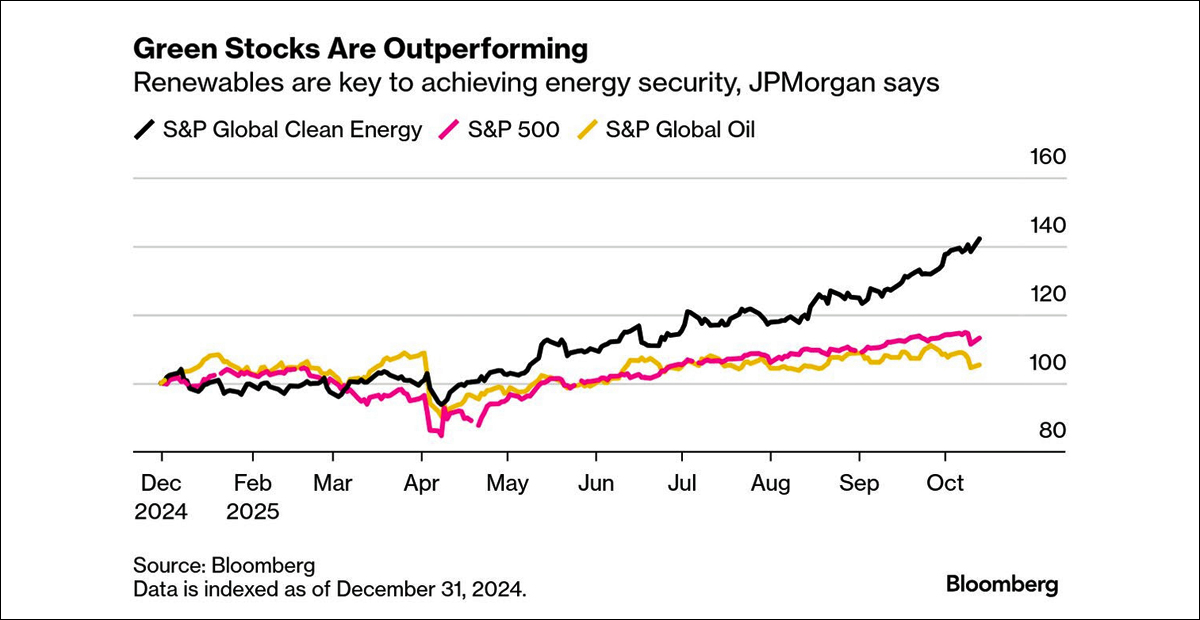
Economic experts say there’s no ambiguity here – without wind and solar, the U.S. is unlikely to meet our power needs. That reality is driving investment and business interests, even as the Trump administration’s focus is on increasing fossil fuel use. Read more here.
Notable Video
Source: CNN
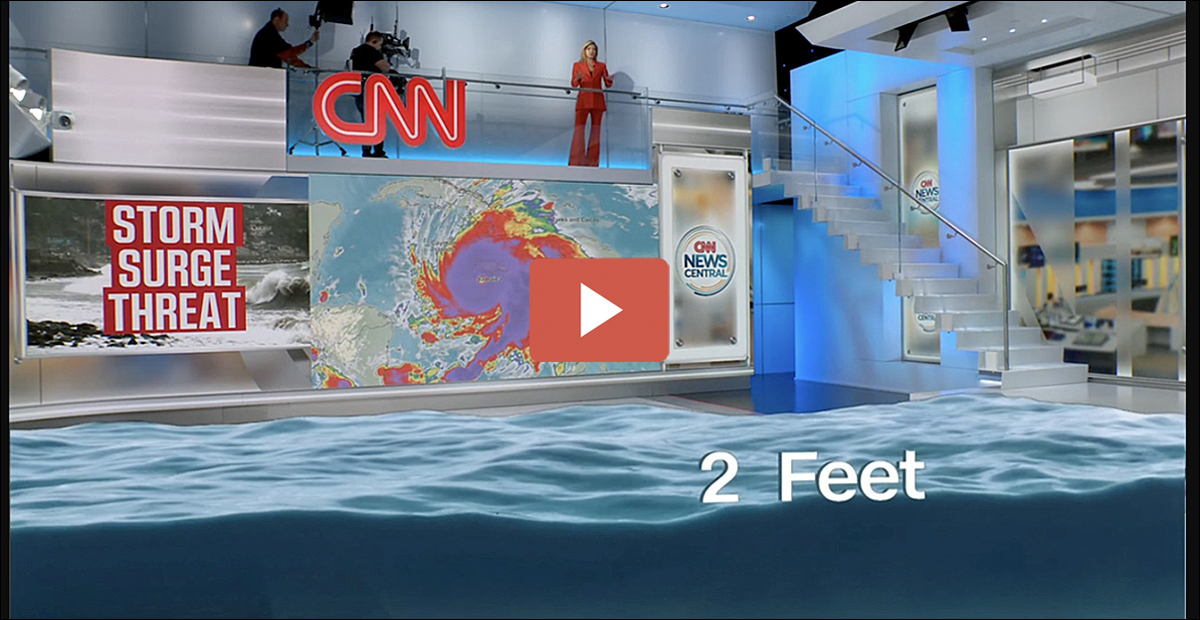
Hurricane Melissa left a path of unspeakable devastation across the Caribbean, where low-lying island nations are ill-equipped to handle the catastrophe of storms supercharged by climate change. Deadly winds and torrential rain are only part of the problem – storm surge also causes mass destruction. This CNN video illustrates what a storm surge of more than 10 feet – as occurred in Jamaica and Cuba – actually looks like.

October 2025
|


C-Change Interviews New York Times Climate Reporter and Author David Gelles
You can get a copy of David’s book and create climate action at the same time! Here’s how:
- Make a donation of $50 or more to C-Change between now and November 1st, and we’ll automatically send you a free copy of Dirtbag Billionaire.
- Host a book club discussion. Let us know that you’re planning an event and we’ll send you up to five free additional copies to help spark a meaningful conversation in your community. (If you need more books, we can work with you to provide what you need at a reduced cost.) To order books, contact Nicole at nicole.curnan@c-changeconversations.org. Note: David is interested in joining us for an online book discussion event in early 2025 – details forthcoming.
 “Dirtbag Billionaire is a powerful reminder that business,
at its best, can be good.
David Gelles captures the complex, often
conflicting pressure founders face – and the
courage it takes to lead with conviction.
It’s an inspiring call to dream big,
do the right thing, and use succes as a lever
for lasting imact. I couldn’t put it down.”
–Sali Christeson, founder and CEO of Argent
Athens Newsletter – August 2025
Dear Friends,
Since we began compiling this digest of local and statewide climate news in Georgia, we’ve both weathered storms and basked in the glow of progress. Cleantech has given us high hopes through high-paying jobs and economic growth across our state. At the same time, we’ve been deeply concerned about how climate change is affecting our ability to stay safe and thrive.
We all agree that we need reliable, affordable energy, but our economic future also depends on a stable climate. We need to be clear-eyed about the risks if we want our wonderful Peach State to thrive. As a group of citizens concerned about the economic, health, and national security impacts of climate change, we hope to build consensus across the political spectrum about the urgent need to address it. We welcome your support and ideas. Please reach out to us!
Sincerely,
The C-Change Conversations Athens Team
Georgia News of Hope
Americus, GA, is attracting economic development by embracing clean energy projects. Three solar companies have collectively invested $736 million in the region and will create more than 2,000 jobs in what could become the largest solar array east of the Mississippi.
Electric vehicle company Rivian will establish an East Coast headquarters in Atlanta. The company plans to hire 500 employees for this location by late 2026. This move supports its upcoming $5 billion Georgia factory and marks one of Atlanta’s largest office investments this year.
Kia Georgia is installing a 3.2-million-square-foot solar panel canopy at its West Point plant to generate clean energy and protect thousands of vehicles from hail damage. The project is expected to produce enough electricity to cover 20 to 30% of the factory’s needs.
An Augusta-based golf cart manufacturer sent two electric vehicles to Pope Leo XIV to use during international visits. The new pope has spoken out about the urgent need for climate action.
An Emory University nursing professor has helped develop a sensor patch to protect farm workers from the dangerous effects of extreme heat. The patch connects to a smartphone and monitors vital signs like heart rate, skin temperature, and hydration to provide real-time alerts to prevent kidney damage and heatstroke. Farm workers are 35 times more likely than others to die from heat-related causes.
The Firefly Trail secured a second major grant of $2.9 million to finance the construction of a 4.5-mile paved section from Maxeys to the Greene County line. This grant advances a plan to create a 39-mile recreational trail from Athens to Union Point along a former railroad corridor that will allow people to explore surrounding rural areas by bike or on foot.
Georgia News of Concern
Many Georgians were shocked by their power bills this summer. Recent rate hikes combined with higher summertime usage pushed the average household Georgia Power bill to $266 in July. Athenians spend a higher percentage of their income on energy than the state average – and more than double what the average American pays. In some of the lowest-income neighborhoods in Athens, residents are spending nearly 30% of their income on energy bills. And a program that would have provided free rooftop solar leases to hundreds of low-income homeowners lost its funding just one day after its launch in August when the Trump administration canceled the “Solar for All” grant.
As energy demand continues to increase, Georgia Power proposed a historic 10,000-megawatt expansion of the utility’s power generating capacity. The bad news is that the plan relies heavily on building and purchasing new gas-fired power plants, locking customers into decades of gas dependency that exposes them to volatile fuel prices and contradicts climate goals. The Georgia Public Service Commission will hold public hearings in October and December before voting to approve this expansion.
Sweltering summer heat in Savannah forced its city council to set a temperature limit for operating horse-drawn carriages that carry tourists through historic downtown. Before the August vote, carriage horses had been working in temperatures up to 95°F or a heat index of up to 110°F. That threshold will drop to 85° or a heat index of 91° next summer.
A new study revealed that 72% of Georgia’s coastal marshes have experienced belowground biomass loss since 2014, a critical indicator of marsh failure caused by increased flooding pressure from sea-level rise. Marshes defend against coastal flooding, filter water, and store carbon.
Ways to Act
Athens is one of the few cities where the U.S. Postal Service has deployed its electric mail trucks. The next-generation vehicles stay quiet and cool, and drivers rave about them. Despite local and national excitement about its plan to create a mostly electric fleet, the Postal Service is facing congressional efforts to strip its $3 billion in federal EV funding. Canceling the program would waste millions already spent and squander a critical opportunity to reduce air pollution from the government’s largest fleet, especially since the mail trucks’ short, stop-and-start routes are considered an ideal application for EV technology.
An $80 million federal grant to Blue Bird Corporation’s bus manufacturing facility in Fort Valley, GA, is also threatened. Approved in 2023, the funding is crucial for expanding the plant and increasing the manpower needed to meet the growing demand for electric school buses. Please reach out to your senators and representatives to express your opposition to efforts that would strip funding for electric postal trucks and buses.
Third Act Georgia will present Sun Day Sunday on Sept. 21 in Winterville’s Marigold Auditorium. The free events will feature the Sun Day Choir, local sustainability experts, demonstrations of solar products, tables with information on renewable energy, free children’s books, and free sundaes.
TheBig Picture: U.S. and Global Climate News
When is winning really losing? It’s when the results of victory cause the opposite impacts than desired, harm supporters more than opponents, and boost your biggest competitor.
The Trump administration’s stance on energy is indeed a losing proposition. It purports to provide cheaper and more secure energy, but in fact drives up costs and limits supply at the exact time that our demand and electricity prices are soaring.
Producing new electricity from utility solar in America today costs as little as $38 a megawatt hour: the most efficient natural gas plant provides the same amount of energy for $107. Solar and battery projects can come online in two years; natural gas plants typically need a five-year runway, in large part due to a shortage of turbines. In short, thwarting new clean energy is making us less energy secure. Consumers will pay for it – experts predict policy changes will make electricity prices rise up to 18% over the next decade, or $192 per average household on an annual basis, and increase the risks of blackouts.
In the big picture, who is being harmed the most? Rural and “Red” America. About 80% of the job and economic growth from clean-energy investment was planned in Republican-leaning districts. That investment has already dropped by a third over the first half of this year versus a year ago. And while anti-wind action has harmed offshore projects, it has impacted the country’s “windbelt” the most – the highest losses are in Texas, with Idaho, Iowa, and Nebraska not far behind.
On the international front, the United States’ reversal is allowing China to extend its lead in this lucrative sector, which provided 10% of China’s GDP growth last year. China is becoming the “one-stop shop” for clean energy. And increasingly, its clean-energy products are superior to fossil fuel versions. For example, China produces EVs that can charge in five minutes, run for 600 miles, and cost significantly less than combustion engine cars. China is also exporting solar and wind technology around the world, enabling developing countries to manufacture “homegrown” electricity that is more secure and less expensive than fossil fuel imports.
And in a stunning role reversal, CO2 emissions in the U.S. rose 4.2% in the first half of 2025, while China’s fell 2.7%. As the U.S. leaves the Paris Agreement and disparages climate action, China is positioning itself as a climate leader, announcing a partnership with the EU to lower climate heating and calling the Paris Agreement the “cornerstone of international climate cooperation.”
It doesn’t feel good to be a loser – to pay more for less. We want our country to be the winner, to build the energy systems of the future, to save money, and to provide a healthier, more economically secure world for our kids and grandkids.
Don’t you?
News of Concern
The administration is working hard to create cover for its unraveling of climate science and action, including a recent DOE report that scientists say is filled with “error, bias, and distortions.” In one glaring mistake, the report states that Arctic melting is minimal, shrinking 5% since 1980. The actual number is 40%. The AP and other news outlets have debunked much of the report’s information, but the administration’s misinformation campaign is incredibly effective, and dangerous, because many people believe that narrative – and that belief precludes them from taking action to stay safer.
And we all need to get ready for climate change, as was so clearly evidenced by the tragic flooding in Texas in July. The flooding was made worse because of two climate impacts. First, warmer ocean waters and a warmer atmosphere enable more water vapor to be held in the atmosphere – for every degree Celsius increase, the atmosphere holds 7% more vapor, and that means floods will continue to get more dangerous. Second, the ground was parched from a drought exacerbated by higher temperatures, and the soil could not absorb enough of the flooding to slow it down. These one-two punches are becoming more frequent in our country and all around the world.
We’re also seeing a one-two punch when it comes to protecting ourselves from supercharged weather events. Hail, for example, is getting larger as the climate warms up, causing $20-$35 billion in losses annually, according to insurance experts. But impacts fueled by climate change are making it increasingly difficult to get affordable insurance, especially in the Midwest, where premiums are skyrocketing. As noted above, our electricity rates nationwide are also soaring – in large part due to the cost of making our grids more resilient to wildfires, storms, and heat waves. Almost 40% of recent cost increases are from upgrading and hardening our grid – and making repairs after extreme weather events is driving up costs as well. This affordability challenge will only get worse as energy-hungry AI centers come online – a single center can require as much electricity as an entire mid-sized city.
Costs are also being driven up by the administration’s action to keep inefficient coal plants online. Coal only provides 15% of our electricity, but it is the most expensive fossil fuel. Keeping these plants running instead of replacing them with cheaper (and cleaner!) fuel sources will cost utility customers billions of dollars.
But there are things happening that are perhaps even more concerning than these direct hits on clean technology. The administration is dismantling much of our scientific expertise, limiting our ability to measure climate change impacts to help farmers, businesses, communities, and families prepare for climate changes. And in a move that would handicap future administrations’ ability to regulate greenhouse gases, the EPA wants to rescind a landmark finding that declared CO2 and other emissions are a danger to our health and welfare.
We know climate change affects our health, but we don’t yet know how to put a cost on how it impacts our happiness and mental health. For many of us, summer has always been an idyllic state of mind as much as a season of outdoor pleasures. But in many places it has become so much more hot and sticky – so much so, scientists have created a new metric to measure “stickiness.” Even the Steve Miller Band, musical mainstays of the summer stage, canceled its 2025 tour because of the risk of extreme weather.
It’s giving us the summertime blues, literally and figuratively. And we have to wonder, what we’re gonna do…
News of Hope
However, at the same time that the U.S. government is trying to minimize action on climate change, the highest court in the world just elevated the issue in a powerful way heard around the world. By recognizing that a healthy climate is a human right, and claiming that countries have a legal obligation to protect the environment from greenhouse gases, the International Court of Justice is holding countries accountable to action – a much-needed bolstering in the drive to lower emissions.
It’s a global issue that needs global action, and a recent move by the European Central Bank could have far-reaching impacts. By integrating a “climate factor” into its financing operations, the bank is doubling down on holding companies accountable for their carbon footprints and upping the motivation for creating cleaner products and processes.
More good news – about 90% of the world’s new renewable energy is now cheaper than power from fossil fuel generation. The world saved almost $500B in energy costs in 2024 using renewables versus fossil fuels. And momentum is growing, with the EU spending 63% more on renewables in the first half of 2025 than a year ago, even as the U.S. investment declined.
And climate action is moving forward, even if it’s in a whisper instead of a roar. Banks are quietly pulling funding from fossil fuels lending and investors are piling into renewable energy, even though they are doing it quietly and withdrawing from associations that could spark the administration’s ire.
We also saw great hope in a recent test of a critical concept in California. The state successfully tried out a two-way grid in July, drawing power from more than 100,000 residential batteries to provide electricity. This model holds great promise, especially as the demand surge from AI and electrification is challenging our existing system. If end users can store and sell energy back to the grid during peak usage periods, it changes the equation dramatically – we’d no longer need to build the same quantities of new power generation facilities.
Adaptation is key to protecting ourselves, our loved ones, and our communities. Two cool new gadgets really got us excited. They’re both sensors designed to keep us safe – a pinecone-sized device could give people a leg up on staying safe from wildfires and a patch that farm workers would wear to monitor vital signs while working outdoors in extreme heat. Ideas like this can change our world one person at a time, making it possible for us to have a healthier future – imagine that.
Notable Graphic
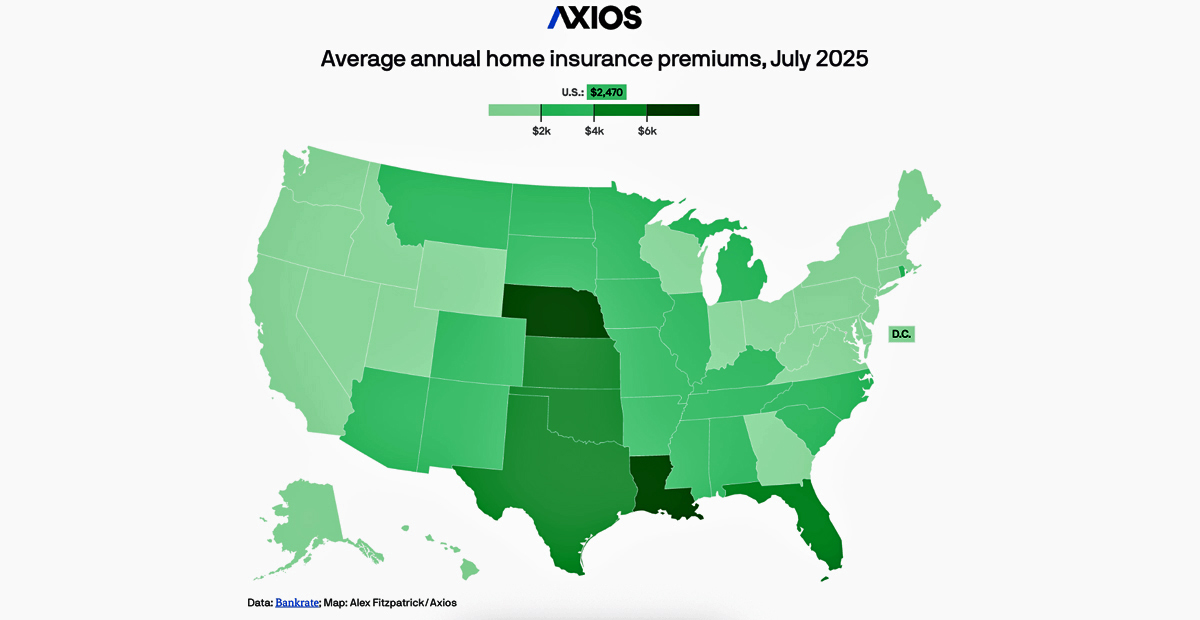
As climate change supercharges our weather, our risk of loss increases – and that is making insurance premiums much more expensive. The national average for home insurance is up 9% since 2023 and, as this graphic shows, it’s particularly high across the Midwest and South.
Notable Quiz
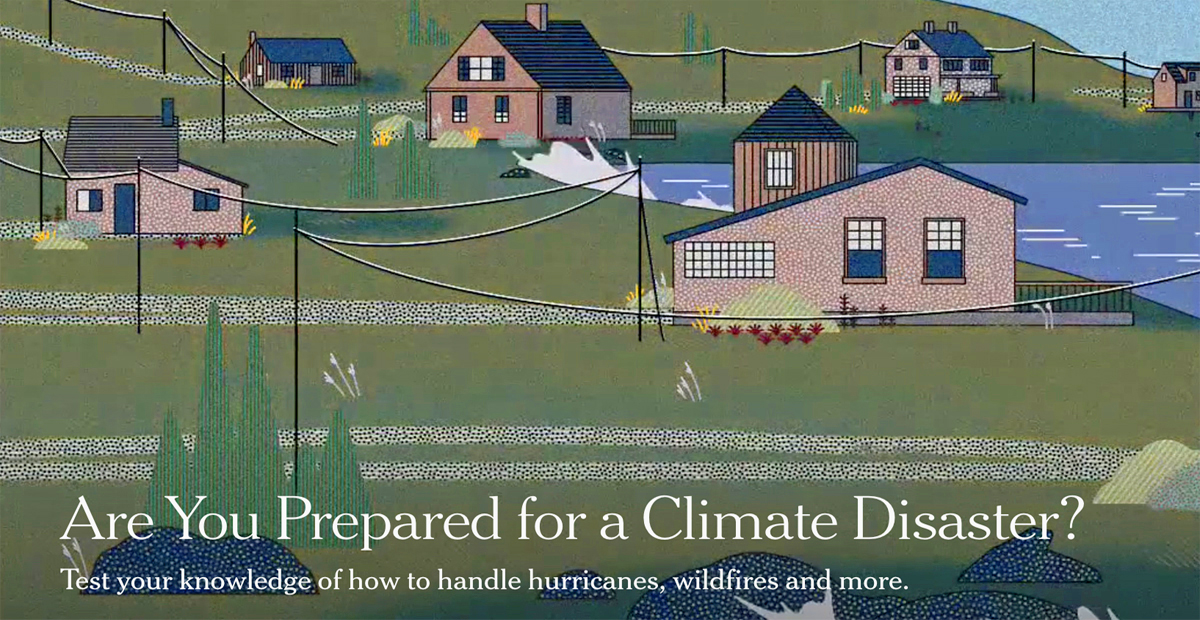
This month, instead of watching a video, we hope you’ll take this interactive, eye-opening New York Times quiz. You’ll learn a lot about what you need to do to keep yourself and your loved ones safe if you’re faced with a climate disaster.
August 2025
Dear Friends,
When is winning really losing? It’s when the results of victory cause the opposite impacts than desired, harm supporters more than opponents, and boost your biggest competitor.
The Trump administration’s stance on energy is indeed a losing proposition. It purports to provide cheaper and more secure energy, but in fact drives up costs and limits supply at the exact time that our demand and electricity prices are soaring.
Producing new electricity from utility solar in America today costs as little as $38 a megawatt hour: the most efficient natural gas plant provides the same amount of energy for $107. Solar and battery projects can come online in two years; natural gas plants typically need a five-year runway, in large part due to a shortage of turbines. In short, thwarting new clean energy is making us less energy secure. Consumers will pay for it – experts predict policy changes will make electricity prices rise up to 18% over the next decade, or $192 per average household on an annual basis, and increase the risks of blackouts.
In the big picture, who is being harmed the most? Rural and “Red” America. About 80% of the job and economic growth from clean-energy investment was planned in Republican-leaning districts. That investment has already dropped by a third over the first half of this year versus a year ago. And while anti-wind action has harmed offshore projects, it has impacted the country’s “windbelt” the most – the highest losses are in Texas, with Idaho, Iowa, and Nebraska not far behind.
On the international front, the United States’ reversal is allowing China to extend its lead in this lucrative sector, which provided 10% of China’s GDP growth last year. China is becoming the “one-stop shop” for clean energy. And increasingly, its clean-energy products are superior to fossil fuel versions. For example, China produces EVs that can charge in five minutes, run for 600 miles, and cost significantly less than combustion engine cars. China is also exporting solar and wind technology around the world, enabling developing countries to manufacture “homegrown” electricity that is more secure and less expensive than fossil fuel imports.
And in a stunning role reversal, CO2 emissions in the U.S. rose 4.2% in the first half of 2025, while China’s fell 2.7%. As the U.S. leaves the Paris Agreement and disparages climate action, China is positioning itself as a climate leader, announcing a partnership with the EU to lower climate heating and calling the Paris Agreement the “cornerstone of international climate cooperation.”
It doesn’t feel good to be a loser – to pay more for less. I want our country to be the winner, to build the energy systems of the future, to save money, and to provide a healthier, more economically secure world for our kids and grandkids.
Don’t you?
Sincerely,
Kathleen Biggins
Founder and President
Notable Quote
“Ten years from now we could look back on this moment as the time in which the U.S. pulled back and essentially lost the transition to clean energy.”
– Nick Nigro, Atlas Public Policy, regarding the predicted impacts of the “One Big Beautiful Bill Act” on the renewable energy sector
News of Concern
The administration is working hard to create cover for its unraveling of climate science and action, including a recent DOE report that scientists say is filled with “error, bias, and distortions.” In one glaring mistake, the report states that Arctic melting is minimal, shrinking 5% since 1980. The actual number is 40%. The AP and other news outlets have debunked much of the report’s information, but the administration’s misinformation campaign is incredibly effective, and dangerous, because many people believe that narrative – and that belief precludes them from taking action to stay safer.
And we all need to get ready for climate change, as was so clearly evidenced by the tragic flooding in Texas in July. The flooding was made worse because of two climate impacts. First, warmer ocean waters and a warmer atmosphere enable more water vapor to be held in the atmosphere – for every degree Celsius increase, the atmosphere holds 7% more vapor, and that means floods will continue to get more dangerous. Second, the ground was parched from a drought exacerbated by higher temperatures, and the soil could not absorb enough of the flooding to slow it down. These one-two punches are becoming more frequent in our country and all around the world.
We’re also seeing a one-two punch when it comes to protecting ourselves from supercharged weather events. Hail, for example, is getting larger as the climate warms up, causing $20-$35 billion in losses annually, according to insurance experts. But impacts fueled by climate change are making it increasingly difficult to get affordable insurance, especially in the Midwest, where premiums are skyrocketing.
As noted above, our electricity rates nationwide are also soaring – in large part due to the cost of making our grids more resilient to wildfires, storms, and heat waves. Almost 40% of recent cost increases are from upgrading and hardening our grid – and making repairs after extreme weather events is driving up costs as well. This affordability challenge will only get worse as energy-hungry AI centers come online – a single center can require as much electricity as an entire mid-sized city.
Costs are also being driven up by the administration’s action to keep inefficient coal plants online. Coal only provides 15% of our electricity, but it is the most expensive fossil fuel. Keeping these plants running instead of replacing them with cheaper (and cleaner!) fuel sources will cost utility customers billions of dollars.
But there are things happening that are perhaps even more concerning than these direct hits on clean technology. The administration is dismantling much of our scientific expertise, limiting our ability to measure climate change impacts to help farmers, businesses, communities, and families prepare for climate changes. And in a move that would handicap future administrations’ ability to regulate greenhouse gases, the EPA wants to rescind a landmark finding that declared CO2 and other emissions are a danger to our health and welfare.
We know climate change affects our health, but we don’t yet know how to put a cost on how it impacts our happiness and mental health. For many of us, summer has always been an idyllic state of mind as much as a season of outdoor pleasures. But in many places it has become so much more hot and sticky – so much so, scientists have created a new metric to measure “stickiness.” Even the Steve Miller Band, musical mainstays of the summer stage, canceled its 2025 tour because of the risk of extreme weather.
It’s giving us the summertime blues, literally and figuratively. And we have to wonder, what we’re gonna do…
News of Hope
However, at the same time that the U.S. government is trying to minimize action on climate change, the highest court in the world just elevated the issue in a powerful way heard around the world. By recognizing that a healthy climate is a human right, and claiming that countries have a legal obligation to protect the environment from greenhouse gases, the International Court of Justice is holding countries accountable to action – a much-needed bolstering in the drive to lower emissions.
It’s a global issue that needs global action, and a recent move by the European Central Bank could have far-reaching impacts. By integrating a “climate factor” into its financing operations, the bank is doubling down on holding companies accountable for their carbon footprints and upping the motivation for creating cleaner products and processes.
More good news – about 90% of the world’s new renewable energy is now cheaper than power from fossil fuel generation. The world saved almost $500B in energy costs in 2024 using renewables versus fossil fuels. And momentum is growing, with the EU spending 63% more on renewables in the first half of 2025 than a year ago, even as the U.S. investment declined.
And climate action is moving forward, even if it’s in a whisper instead of a roar. Banks are quietly pulling funding from fossil fuels lending and investors are piling into renewable energy, even though they are doing it quietly and withdrawing from associations that could spark the administration’s ire.
We also saw great hope in a recent test of a critical concept in California. The state successfully tried out a two-way grid in July, drawing power from more than 100,000 residential batteries to provide electricity. This model holds great promise, especially as the demand surge from AI and electrification is challenging our existing system. If end users can store and sell energy back to the grid during peak usage periods, it changes the equation dramatically – we’d no longer need to build the same quantities of new power generation facilities.
Adaptation is key to protecting ourselves, our loved ones, and our communities. Two cool new gadgets really got us excited. They’re both sensors designed to keep us safe – a pinecone-sized device could give people a leg up on staying safe from wildfires and a patch that farm workers would wear to monitor vital signs while working outdoors in extreme heat. Ideas like this can change our world one person at a time, making it possible for us to have a healthier future – imagine that.
Notable Graphic
As climate change supercharges our weather, our risk of loss increases – and that is making insurance premiums much more expensive. The national average for home insurance is up 9% since 2023 and, as this graphic shows, it’s particularly high across the Midwest and South.
Notable Quiz
Source: The New York Times
This month, instead of watching a video, we hope you’ll take this interactive, eye-opening New York Times quiz. You’ll learn a lot about what you need to do to keep yourself and your loved ones safe if you’re faced with a climate disaster.