thumb football OP

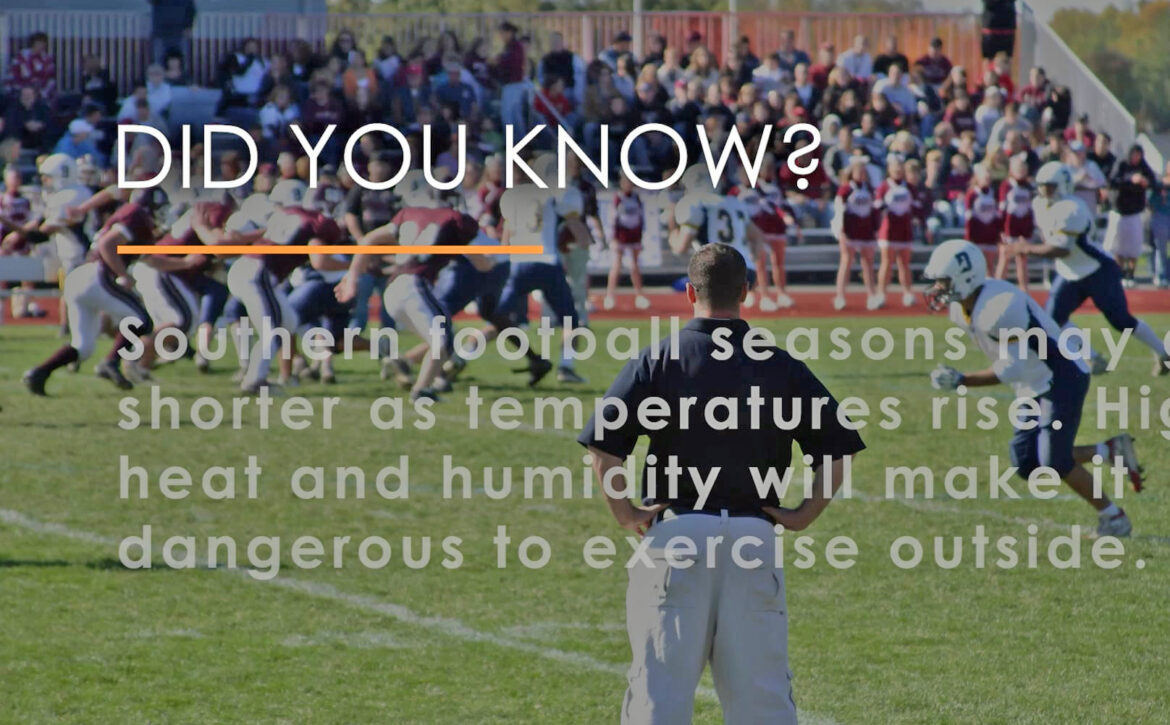
Too Hot for Football?

To learn more, click here.

Read More
thumb cows OP

Fodder from the Sea

To learn more, click here.

Read More
thumb oil rigs OP

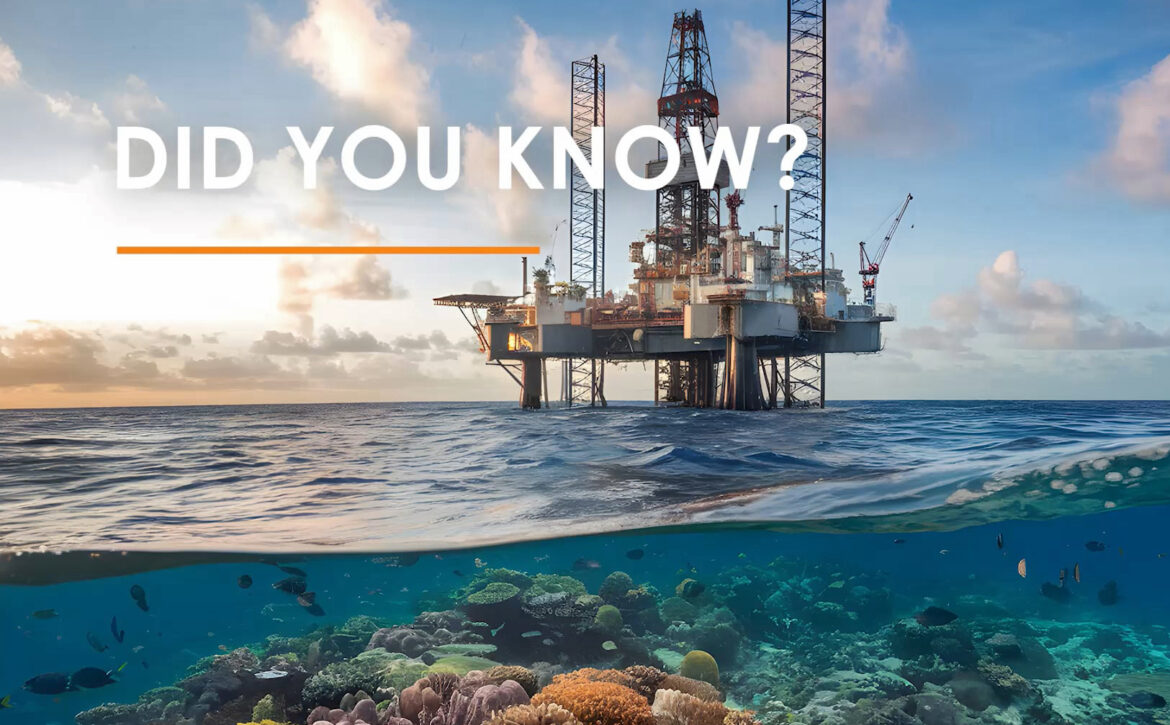
Oil Rigs as Reefs

To learn more, click here.

Read More
thumb bamboo OP

Bamboo is Our Friend

To learn more, click here.

Read More
thumb choc

Chocolate is at Risk

To learn more, click on the post.

Read More
thumb china OP

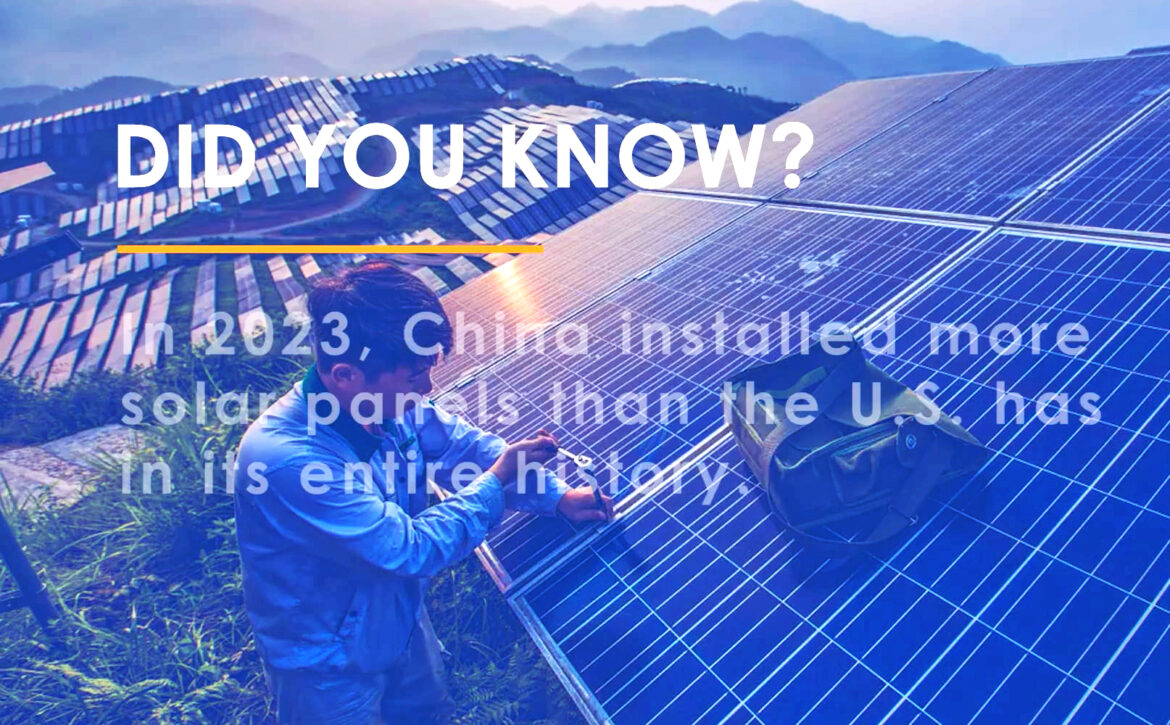
Chinese Solar Soars

To learn more, click on the post.

Read More
Podcast thumb

A Climate Change Podcast

Episode Description

In this episode. we’re joined by Kathleen Biggins, founder and president of C-Change Conversations, a nonprofit committed to fostering non-partisan, science-based conversations about climate change. Kathleen shares her journey from jounalism and healthcare to climate communications and how she and her bipartisan team developed the acclaimed C-Change Primer – an accessible, apolitical introduction to climate science that’s been presented to over 20,000 people across 32 states.

We explore why bridging political divides is essential for meaningful climate action, how to talk about climate change around the kitchen table, and ways to engage skeptics using shared values like health, safety, and economic well-being. Kathleen also shares personal stories and examples from the Primer series that inspire understanding and action – even in the most polarized spaces. With a 90% consensus rate across audiences, C-Change proves that inclusive, solutions-oriented conversations can move the needle.

This episode is a must-listen for anyone ready to talk climate without the conflict.

Read More
Danilion250

March 2025

Dear Friends,

Is climate change something we need to stoically accept, simply a price we have to pay for living in a modern world?

The U.S. Secretary of Energy directly said so this month when speaking with financial and energy executives at CERAWeek, the annual international conference of energy leaders.

We appreciate that the administration has moved away from its historic position that climate change is a hoax to admitting that it is a real “phenomenon” impacting our world right now.

But to us, his statement insinuates that burning fossil fuels – which is causing climate change – is the only way to have a modern life. Tell that to Texas, which ran on 76% renewable and battery power earlier this month, or to South Dakota or Iowa, which safely, reliably, and economically got about three-quarters of their power from renewables last year.

Tell that to China, which is adding clean power at a blistering rate – electrifying its manufacturing, transportation, and homes so fast that researchers are calling it the world’s first “electrostate” – gaining energy dominance through electricity rather than fossil fuels.

Tell that to investors who plowed $2T into clean tech last year – twice the amount that was invested in fossil fuels.

And tell the American people how big those “trade-offs” really are, so they know the sacrifices we are being asked to make.

The Secretary of Energy is asking a lot of us. While our economies are currently dependent on fossil fuels, they are turbocharging climate change and will make our world more dangerous and expensive, and much less beautiful as we lose our iconic spaces and species. Is that the modern world we want? Or do we want to double down on the innovation, new processes, and systems that other countries are embracing to create a different kind of future?

I know my vote. What do you think?

Sincerely,
Kathleen Biggins
Founder and President

Notable Quote
“The Trump administration will treat climate change for what it is, a global physical phenomenon that is a side effect of building the modern world. Everything in life involves trade-offs. Everything.”
– Chris Wright, U.S. Secretary of Energy
News of Concern

So we’ll jump right into it – the World Meteorological Organization’s newly released 2024 report paints a sobering picture: it was the hottest year ever recorded and the first year we broke the 1.5°C increase threshold, the limit above which natural system changes are expected to become much more significant and disruptive. The report also tells us that glaciers are melting and sea levels are rising at record levels, and disasters like tropical cyclones, floods, droughts, and other hazards caused a record number of refugees and led to “massive economic and social upheaval.”
 
Another recent report explains why these changes are happening so fast: our overall emissions reached new heights last year, despite the record growth in clean energy. Remarkably, 22 countries decreased emissions while growing their economies – and  emissions in China, the world’s largest emitter, were relatively flat, just a .2% increase. But these gains were offset by increased emissions from developing countries like India. We can still get to “peak emissions” in time to meet our temperature goals, but the world needs to do more and move faster.
 
At the exact time that climate impacts are revving up (last year, the U.S. experienced weather-related disasters at a rate of almost one every four days), the agencies we look to to help us prepare and repair are being significantly cut and deregulated by the DOGE. Consider NOAA, for example, which just lost almost 900 jobs, including hurricane hunters, the pilots who fly into these dangerous storms to gather data for the National Hurricane Center. Climate change is significantly disrupting hurricane patterns: they are intensifying more quickly, reaching higher wind speeds, and forming and staying strong farther from the equator. We are more vulnerable than ever, so cutting our “eyes in the sky” seems like a recipe for disaster.
 
The administration’s across-the-board “canceling” of climate change will make us less prepared for the disruption ahead. Agencies that use federal funds to rebuild are no longer required to factor in updated levels of flooding when they build roads, bridges, and buildings, putting taxpayer dollars at risk. And the U.S. Coast Guard is no longer using the words climate change or educating cadets on climate change at its academy, despite the real fact that they are a frontline defense of our coasts and seas.
 
Another recent setback was Congress’ repeal of the methane tax, designed to force oil and gas companies to cut back on methane leaks from pipelines, drill sites, and oil and gas equipment. Cutting methane, which traps more heat than CO2 but lasts for shorter periods in the atmosphere, is one of the easiest ways we can slow rising temperatures. The tax would have cut emissions equal to removing 8 million gas-powered cars from our roads. 
 
On a more human-sized scale, a recent study on heat and aging caught our attention. It appears that high temperatures are aging some of us more quickly than others. Residents of areas that get hotter and stay warm longer (say, Arizona) could have a cellular age that’s 14 months older than those in cooler regions (like Washington State). The scientists suggested long-term exposure to high heat could have the same negative effects on our bodies as habitual smoking.

And lastly, we are concerned that the natural systems that have normally been our ally are now part of the threat. Vast Colorado forests, decimated by pests and drought, are now emitting more carbon than they are absorbing. We know our forests as places that help clean our air and soothe our souls – they seem invincible but their future, too, is at risk from climate change.

News of Hope

And yet! Though it may slow down here in the U.S., the clean-energy transition will most definitely progress. Last year, for the first time, wind and solar produced more electricity than coal. States are rapidly increasing their solar deployment – Georgia and Illinois, for example, both doubled theirs in 2024, and Texas broke its own records in one week in early March.
 
This explosive growth in power generated by solar and wind is supported by increasing battery storage, which is quickly becoming a favored way to boost grid security. The Energy Information Administration (EIA) says the U.S. could plug in more than 18 gigawatts of new utility-scale energy storage capacity – enough to provide power to almost 16 million households – to the grid in 2025, up from 11 GW last year. Texas and California lead the charge here, but there’s real progress in other states, notably Arizona, which is set to double its battery capacity this year.
 
The economic and job growth from this transition is benefiting Republican districts across the country – and their governors and legislators know it. There is growing Republican support for the policies that are driving the new-energy transition. Clean energy is the cheapest and quickest way to add power to our grid to meet growing demand, and is increasingly seen as adding to our energy security. Many conservatives rightly understand that the global clean-tech “revolution” will impact every sector of the economy – and it will be won by the leaders, not the foot draggers.
 
On the other side of the globe, China continues to step on the gas pedal … er, that is to say, the electric pedal. BYD, a Chinese electric vehicle maker, has built an SUV with a battery that charges in about the same time it would take to fill a tank of gas – about five minutes. This lightning-speed charging will be a game changer and U.S. automakers are sure to follow this path in the coming years.
 
We mentioned above our concerns over how rising temperatures are affecting our health, but here’s some hopeful news on that front. A new study shows that more Americans understand that climate change will affect our health – and that we are more trustful of the scientists and doctors who are delivering the message. Knowledge is power – the more we understand, the better our chances to navigate the risks to stay well.
 
Finally, we love this vignette about a man who kept his lights on after Hurricane Helene by drawing power from his EV. New technology enables energy to flow back and forth –  to and from our homes and cars, but also from our homes back to the grid. This means that when utilities need a burst of additional power, they could harvest it from us (and pay us for it!) versus firing up a new plant. Innovation is coming in all sorts of ways.

Notable Graphic
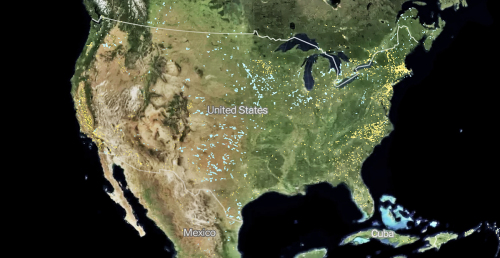
Source: The New York Times


The tremendous growth of solar and wind power in the United States is truly remarkable. This 
New York Times animation gives us a great picture of what it looks like from space.

Notable Video

 Source: CNBC

We’ve spoken quite a bit about our concern that insurance is becoming more difficult – or impossible – to get in many parts of the country due to extreme weather events. In this sobering report, one industry expert says climate change could cause at least 20% of U.S. homes to be devalued, a devastating blow for our economy and our own wallets.

Read More
Concern250

Athens Newsletter April 2025

Dear Friends,

Since we began compiling this digest of local and statewide climate news in Georgia, we’ve both weathered storms and basked in the glow of progress. Cleantech has given us high hopes through high-paying jobs and economic growth across our state. At the same time, we’ve been deeply concerned about how climate change is affecting our ability to stay safe and thrive.

We all agree that we need reliable, affordable energy, but our economic future also depends on a stable climate. We need to be clear-eyed about the risks if we want our wonderful Peach State to thrive. As a group of citizens concerned about the economic, health, and national security impacts of climate change, we hope to build consensus across the political spectrum about the urgent need to address it. We welcome your support and ideas. Please reach out to us!

Sincerely,
The C-Change Conversations Athens Team

Georgia News of Hope

Atlanta-based railroad company Norfolk Southern has introduced RailGreen, the world’s first freight rail “carbon insetting” service, enabling customers to purchase biofuels to reduce supply chain emissions. This initiative allows customers to pay slightly more for shipping to ensure more biofuels (from vegetable oil, for example) or zero-emissions fuels are used by the trains, which could help companies meet their own sustainability and emissions goals. It’s an innovative approach in the rail sector that mirrors successful programs in maritime and truck shipping.
 
Solar farms are becoming more common in Georgia, and they are boosting local economies in some of the poorest counties. One innovative company, Silicon Ranch, is reaping the benefits of producing solar energy while still using the land to raise sheep. This is part of a trend called “agrivoltaics,” which keeps the land in food production while providing substantial amounts of energy. This innovative approach uses regenerative farming so it is good for the land and good for our state’s economy. Silicon Ranch has created more than 6,500 jobs, invested more than $4 billion in the state, and will generate $250 million in tax revenue.
 
New fast-charging EV chargers are coming to Brookhaven at no upfront cost to the city. Sona Energy Solutions will own and operate the chargers, with the city receiving 10% of the net revenue as well as a discount for charging municipal vehicles.

Georgia News of Concern

Georgia’s recent legislative session ended with little progress on climate and environmental protections. Despite significant bipartisan support, two bills to restrict mining that would harm ecologically sensitive areas of the Okefenokee Swamp (a major carbon sink) stalled for the fourth year, leaving the fate of a proposed titanium mine in the hands of state regulators.
 
Bills aimed at mitigating data centers’ strain on Georgia’s power grid failed, despite rising electricity costs and Atlanta’s newfound status as the nation’s top data center market. And the push to expand community solar options was derailed after losing bipartisan support.

A recent investigation shows how Georgia Power’s own plans limit growth of renewable energy in our state. By removing incentives to expand or keep the net-metering solar program that encouraged rooftop solar, the utility and the Public Service Commission (PSC) that regulates it have failed to help Georgians capitalize on an abundant, cheap source of clean energy. As a result, Georgia ranks 43rd in the nation for rooftop solar. 

Improving efficiency and adding more rooftop solar could save ratepayers $300-$400 per solar home in Georgia. Georgia Power’s load factor is well below the national average, which means less energy efficiency and higher costs for consumers – the cost of electricity has jumped by more than $44 per month since 2023.

As Georgia continues to recover from Hurricane Helene’s devastation, experts warn that recent budget cuts and staff reductions at the National Oceanic and Atmospheric Administration (NOAA), which houses the National Weather Service, could weaken hurricane forecasting accuracy ahead of the summer storm season. Meteorologists say deteriorating monitoring systems—including satellites, flood gauges, and weather stations—will also make forecasting storms more difficult. Emergency managers also face frozen federal disaster grants, which will likely complicate recovery and preparedness efforts.

A prominent Georgia-based environmental philanthropy, the Ray C. Anderson Foundation, has announced it will wind down operations by 2030 after distributing its remaining funds to climate and sustainability initiatives. Since 2012, the foundation has granted more than $36 million to projects like The Ray, an 18-mile stretch of I-85 that has served as a laboratory for renewable energy, biodiversity, and traffic safety solutions research. Carpet company mogul Ray Anderson’s story was documented in the film “Beyond Zero,” which provides a roadmap for business leaders who want to reverse climate change. 

Ways to Act

A Yale study recently found that 68% of Georgians want a clean energy transition (two points higher than the national average). It’s important for us to participate in the regulatory process in order to make that transition happen. Here are some ways we can do that:

The Big Picture: U.S. and Global Climate News

In its first 100 days, the Trump administration has taken a wrecking ball to cleantech and climate action, even to the point of stopping new, shovel-ready, clean-energy projects, shutting down weather forecasting that millions use to stay safe, and dismissing the experts who compile the Congressionally-mandated “National Climate Assessment,” which is used by states and companies to help prepare for climate-related disasters.

The cost has already been substantial – over $8B in clean energy projects have been cancelled – and the chaotic policy swings have frozen many cleantech manufacturers’ process of reshoring jobs in the United States. 

The administration claims this approach will tamp down on climate anxiety and provide energy “security.” But how can an energy system be considered secure when it causes greater insecurity across our economy and our lives as climate change impacts our infrastructure, health, and insurance costs, and makes it much harder to grow enough food, have clean water, and work or recreate safely outside?

Energy “security” means updating and upgrading our current system so it can meet today’s and tomorrow’s energy needs – safely, affordably, and reliably. It means using fossil fuels when we must, but pushing forward cleaner alternatives when we can.

And to reach energy security we should be investing more, because the real excitement (and hope) lies in what is coming – the innovation already in the works and just being dreamed of. Whether it’s ways to harness solar power, methods to capture carbon, or sensors that enable farmers to better forecast long-term weather patterns and risks, we need to create new tools to help us succeed in this different, more dangerous world.

Investment in cleantech makes economic sense, moral sense, and – because most clean-energy projects are in conservative areas and drive energy costs down – political sense.  

Why are we going backward?

Notable Quote

“What we’re saying is, ‘Don’t just put a partisan hat on.’ Let’s put a ‘What-is-best-for-the-country’ hat on.”

– Sen. John Curtis (R-Utah), signer of a letter to the Senate majority leader asking for  protection of some clean-energy tax credits in the Inflation Reduction Act

News of Concern

Nearly half of Americans live with dangerous levels of air pollution.             Source: Leo Visions/Unsplash

At a time when carbon dioxide levels are jumping off the charts, and when we are experiencing weather-related disasters every four days, our scientific institutions that monitor and study the climate are being shut down and muzzled. States and NGOs are fighting back with legal challenges but in the meantime we’re left with a vacuum of information and guidance. 

Following up on campaign pledges, President Trump is moving so briskly and forcefully to dismantle climate action and to bolster support for fossil fuels in this country, it’s hard to keep track. Of all of his executive orders since taking office, a fifth, or 20, have been in the environmental area. 

Some of the President’s most recent steps:

  • Bolstered coal production by exempting a third of coal-fired capacity from the Mercury and Air Toxics Standards rule. Energy from coal is almost double the cost as that from renewable sources and burning coal is highly polluting.   
  • Sped up environmental reviews that generally take 12 months to just 14 days for oil, gas, and mining projects. Importantly, these sped-up reviews do not extend to renewable projects.

  • Announced plans to fast track permits for mining, drilling, and fossil fuel production on public lands

  • Disclosed planned tariffs of up to 3,521% on solar panels from four countries in Southeast Asia

  • Moved to block states from implementing policies that reduce fossil fuel use and mitigate climate impacts

All of this is counterproductive because most of the energy ready to be deployed most quickly and cheaply onto the grid is in renewable energy and battery projects. And while the administration pays lip service to supporting fossil fuels on one hand, its trade policies have set off dizzying market losses for oil and gas companies, putting drilling plans on hold. In fact, the oil and gas industry’s drop in market value has been the largest decline of any sector, and gas prices have increased since President Trump took office. 

In another area where things are not as straightforward as expected, action to curb air pollution is exacerbating climate change. More specifically, China’s efforts to clean up its air pollution have taken reflective particulates – which help reflect solar energy back into space – out of the air. This has sped up anticipated temperature increases since 2010. It’s a poignant reminder of how complicated our climate system is and how important research and scientific investigation is to understand it. 

Recent reports about our air and soil have left us feeling rather breathless. The sky above us is too dirty and the ground below us is too dry. About half of Americans are living with dangerous air quality year round, increasing our risks of asthma attacks, higher blood pressure, cardiac disease, lung cancer, and premature death. And across the globe, the decrease of moisture in our soil may indicate an “irreversible shift” in our water supply that will make droughts more severe and more frequent, devastating food production and forcing millions of people to migrate away from arid regions. 

The longer we wait to take action, the greater the cost and pain will be – for our economy, our health, and our planet. 

News of Hope

The IRA was designed to benefit millions of Americans.                               Source: Yale Climate Connections

As Congress wrestles with the impending budget bill, what will win out when it comes to clean energy – economic sense or partisan brinkmanship? There’s growing pushback from Republican leaders who want to preserve IRA tax credits and project funding. Four U.S. Republican senators recently urged their GOP peers to consider the economic benefits of building out and utilizing clean energy in their districts. About 73% of IRA investments were allocated to states that voted for President Trump – and, as the chart above shows, the payoff will be galaxies beyond “just” lowering our carbon emissions. 

While we wait to see how that plays out, we were heartened when a federal judge ordered the immediate reinstatement of frozen funding for both the IRA and the Infrastructure Investment and Jobs Act.   

Now, here’s some undeniably hopeful news – we passed some big clean energy milestones recently. These are:

We also received good news in our transportation sector – the sector where the U.S. emits its largest portion of greenhouse gases. Electric vehicle sales accelerated in the first quarter of 2025, with almost 300,000 sold – 11% more than in the first quarter of 2024. And globally, EV sales were up 29% in March. Impending tariffs may play a role as the year goes on, but these numbers are clear evidence that more and more drivers are happy with EV technology – and that’s only going to improve as new battery designs drive costs down.

And as always, there were announcements of some very cool innovations. One really piqued our interest: Researchers at Cornell University are working on a solar “morphing skin” that would wrap around large buildings. Not only would these skins have the potential to generate 10-40% more energy than solar panels, they would be more eye-pleasing and could reduce the need for vast swaths of land for arrays. 

From sun-drenched fields in Indiana to windswept plains in Missouri, solar and wind can be so important to a community. We loved these tales of evangelical groups embracing solar as a “mandate” to protect nature and of a funeral director who helped rescue his town through the power of wind. Stories like these remind us that we’re far from alone in caring for the future of our families and neighbors – they give us hope to weather the storm.

Notable Graphic


Because renewable energy is cheaper than fossil fuels in many parts of the country, congressional cuts to the Inflation Reduction Act could significantly increase energy bills for households and businesses across the country. This chart shows the states that are projected to be the most affected by rate hikes.

Notable Video


Climate change is causing shifts in weather that we’re just beginning to understand. AccuWeather took a look at two recent reports: a National Geographic investigation on how tornadoes might be affected and a New York Times story about how increasingly rapid temperature swings affect us.

Read More
Sign Up for News!