tumisu-job-3790033_640

C-Change Conversations is Hiring

Chief Operating Officer

Hours: 40 hours per week, flexible schedule between 9-5, Monday through Friday, with periodic evenings and weekends 

C-Change seeks a mission-oriented COO to oversee and manage all aspects of C-Change’s internal operations, including board support, human resources, and financial oversight, in addition to overseeing the organization’s marketing initiatives. The COO will report to the President and will be an integral member of the senior leadership team. The ideal candidate will be a seasoned strategic and process-minded leader who can ensure a small organization maximizes its impact.

Key Responsibilities

Leadership and Board Support

  • Assist the President in the development and adherence to a strategic plan focused on maximizing the organization’s impact
  • Oversee the Board schedule, development of meeting agendas, and the implementation of Board-initiated operations improvements
  • Lead weekly staff meetings, assuring program and organizational process stay on track and progress forward
  • Oversee employee and consultant hiring including management of recruitment, draft job descriptions, onboard and offboard, and assist with performance reviews
  • Work to assure that all staff members have the resources needed to fulfill their job responsibilities

Marketing 

  • Lead the development and implementation of marketing initiatives to grow the impact of the organization, aiming to increase audience numbers and further strengthen the organization’s profile both locally and nationally
  • Assure brand integrity and top-level professionalism is maintained

Finance and Fundraising

  • Support the Board Treasurer and members of senior leadership on financial planning, budgeting, and cash flow
  • Design an annual operational budget, manage effectively within this budget, and report accurately each month on progress made and challenges encountered
  • Oversee management of and further develop the annual fundraising activities, including creation of an annual fundraising plan, tracking of donations, development of correspondence, and solicitations
  • Manage the annual benefit celebration, including oversight of event logistics, creation and support of a volunteer benefit committee, solicitation of sponsors, and ticket sales

Required Qualifications

  • BA required, advanced degree in relevant field preferred
  • At least five years of experience in management roles, ideally in the non-profit sector
  • Proven track record of success in facilitating progressive organizational change and development 
  • Energetic, flexible, collaborative, and proactive; a team leader who can positively and productively impact both strategic and tactical finance and administration initiatives
  • Exceptional written, oral, interpersonal, and presentation skills and the ability to interface effectively with senior management and staff
  • Self-reliant with excellent judgment and creative problem-solving skills including negotiation and conflict resolution skills
  • Mission-driven and aligned with C-Change’s core values 
  • Strong mentoring and coaching experience of a team with diverse levels of expertise
  • Familiarity with donor management software and Quickbooks online is a plus

About the organization:

C-Change Conversations educates people about the effects of climate change on our jobs and economy, health and safety, and geopolitical security, as well as the solutions that are developing to mitigate those risks. Our nonpartisan approach helps audiences across the political spectrum understand how climate change will impact them personally — and why there is urgency to address it. To date, we have reached more than 25,000 people in 33 states and internationally, helping to build consensus for action.

Interested applicants should send a cover letter and resume to hr@c-changeconversations.org by February 16, 2026.

Read More
Podcast

Kathleen Biggins on HerStory Circle Podcast: When a Storm Shatters Certainty

How One Woman Changed 23,000 Minds About Climate Change

Read More
demonstration 250

Let’s Stop Calling Climate a Green Risk

January 2026


Dear Friends,

Welcome to the great era of “green hushing.” It’s a mind-bending moment in the U.S. when climate change increasingly imperils our economy and well-being, but policymakers, scientists, businesses, teachers, reporters, federal agencies, and even park rangers are not supposed to talk about it. 

The Trump administration’s animus toward “all things green” – including the scientific inquiry that enables us to measure climate change and understand its scale and scope – is working to silence climate discussion and stop critical innovation that could mitigate the threat. Banks have retreated from climate-forward lending, companies no longer speak much about their decarbonization goals, clean-energy projects that promised high-paying jobs and lower energy costs are being canceled, and the U.S. is dropping out of more than 60 international organizations involved with biodiversity, conservation, and climate change. Even the Democratic party has muted its climate messaging, recognizing its longer-term focus isn’t resonating in today’s “hair on fire” political environment.  

But, unfortunately, simply “canceling” climate change won’t make it go away. 

Two reports issued in January underscore how climate change’s impacts on temperatures and ecosystems are threatening our economic and geopolitical security. 

In the first, the United Nations declared that the world is now in “water bankruptcy,” and water systems have been so compromised we cannot reverse the damage. Water systems are being stressed both by climate change – which alters rain patterns, concentrates water pollution, and leads to more frequent and severe droughts – and excessive uptake from aquifers, lakes, rivers, and reservoirs. Concerningly, already three-quarters of humanity live in water-stressed environments, and the challenge will only get greater as temperatures continue to rise. Water stress has been linked to the current unrest in Iran and to the Syrian civil war, and military leaders around the world warn that water scarcity and stress can be weaponized and can lead to increased global instability.

The second report, issued by UK’s Joint Intelligence Committee and based on information from MI5 and MI6, recognizes impending ecosystem collapse as a direct threat to national security. Climate change is turning rainforests into savannahs, coral reefs into lifeless skeletons, boreal forests into wildfire tinder, and is permanently melting critical mountain glaciers. Britain’s security forces predict these ecosystem losses across the world will drive up food insecurity, increase migration, change global weather patterns, and increase the risks of pandemics. These same threats, of course, are true for us on this side of the Atlantic (and climate threats have been named as such in our own intelligence assessments from 2009 until last year).

These security warnings are crystal clear: large-scale disruption of our natural world directly destabilizes our human world. 

So, let’s stop calling climate a green risk. Let’s recognize it for what it really is – an economic risk, a health risk, and a security risk.

And let’s start talking loudly about it.

Sincerely,
Kathleen Biggins
Founder and President

Notable Quote

“Enough critical systems around the world have crossed these [water bankruptcy] thresholds. These systems are interconnected through trade, migration, climate feedbacks, and geopolitical dependencies, so the global risk landscape is now fundamentally altered.”

– Kaveh Madani, director of the UN University’s Institute for Water, Environment, and Health

News of  Concern

After years of declining emissions, U.S. carbon pollution increased 2.4% last year, in part due to increased coal usage. Experts believe federal policies set into place in 2025 to boost fossil fuels and curtail clean energy will add to emission pressure in the future.

This push to suppress clean energy is a bigger deal than many realize. It’s not just emissions that are rising – electricity demand and prices are skyrocketing, too. Clean energy can come online in a year or two, while fossil fuel plants and nuclear plants usually take five to 10 (or more) years, respectively. So it is concerning that at a time when we need more supply immediately, almost 2,000 new power projects were canceled last year, with the vast majority (93%) of them in clean-energy generation. 

The Trump administration also announced it is shutting down one of the crown jewels of climate research – the National Center for Atmospheric Research. This lab is critically important for predicting, preparing for, and responding to severe weather. The administration’s dismantling of climate institutions and initiatives is so widespread across weather tracking and preparedness, investments in clean technologies, and federal agencies that many say it will take generations to repair.

As warming air and oceans cause Greenland’s ice to melt, access to shipping lanes is expanding and long-buried, important minerals are becoming accessible. But as nations battle over who will control that power and those dollars, we are concerned that the world will lose sight of just how important this island is to our climate and the health of our planet.   

One reason researching climate is so critical? To keep our homes safer from more frequent climate-enhanced natural disasters. Whether it’s bigger hailstones, faster-moving fires, or more intense hurricanes, our primary investments – our homes – are increasingly at peril. We can prepare ourselves better for the future if we understand the risks. Real estate buyers can now access climate risk information on every listing. However, this new input is roiling real estate markets because it can harm a seller’s ability to sell a home if climate metrics are poor. It’s another example of the pain ahead as we reckon with the reality of climate change, and begin to price it into our systems. 

Another reckoning ahead is with our growing plastic addiction. A new report projects plastic pollution is on track to grow by an astounding 58% by 2040: if global plastic pollution were a country, it would be the world’s third-largest emitter. Plastic is a double whammy of climate woes – made from petroleum and produced with petroleum. It’s already clogging our waters and harming our bodies, and similarly to climate change, policymakers are struggling to deal with the problem.

And if you’re reading this while drinking a cup of coffee, we’ve learned that our beloved joe may taste very different in the near future. As climate change damages coffee forests, Brazilian farmers are moving away from smooth arabica beans to more bitter robusta beans, which are more heat and disease resistant.

Finally, it’s when the impacts of climate change hit home that we really begin to understand the threat. This poignant story of a Christmas village in Washington State shows just how fragile we are. Besieged by fire, storms, and power outages, this small mountain town that relies on tourism is scrambling to pick up the pieces from a holiday season that wasn’t. It’s a heartbreaker. 

News of  Hope

While clean-energy development is hitting headwinds in the U.S., it’s soaring globally. Some important milestones achieved in 2025:

The world produced more electricity from renewable sources than from coal.
The EU produced more electricity from wind and solar than all fossil fuels combined. 

In both China and India, the world’s largest and third-largest greenhouse gas emitters respectively, coal-powered electricity generation dropped due to the rapid growth of renewables.More than 25% of all new cars purchased were electric, and sales are rising rapidly because they are now cheaper than combustion engine cars in emerging markets.

The global renewables boom is pushing investment in the cleantech sector to new heights. And it’s happening in places you might not expect. Saudi Arabia is deploying solar energy at the fastest rate in the world, on pace to generate 50% of its electricity with clean power within five years. 

In the U.S., batteries are growing at astounding rates. This is a game-changer. During sunny and windy periods, we often produce an excess of cheap, clean energy and have to throw it away. With batteries, we can save that extra energy and use it at peak times after the sun has set, displacing more expensive and emission-intensive fossil fuels.

The renewables and batteries we’ve added are also making our grids more reliable – including helping us meet climate-enhanced winter storm challenges. Experts especially noted that Texas’s grid – with its expanded use of batteries and weatherization of fossil resources – bore the strain of the monster January storm that swept the country, in contrast to a 2021 storm when that grid was more heavily dependent on fossil fuels resources. 

The Mid-Atlantic and Northeast corridors received good news this month on resiliency as well. Judges allowed offshore wind development to get back on track at several projects that had been stopped mid-stream last year. Offshore wind peaks in winter, which should help strengthen the grid in future winter storms, and it also can lower our costs during cold weather when our higher-priced natural gas supply is stretched due to heating and electricity demands. 

In North Carolina, small mountain towns that were battered by hurricanes in 2024 are not just adapting their infrastructure, they’re re-envisioning their resilience, building microgrids, adding batteries, and thinking of new ways to stay safe from the next storm. 

And in the southernmost part of the world, glaciologists are re-envisioning our future by protecting our ability to look to the past. Glaciologists fear ice cores – one of our most important lenses into the Earth’s history – will melt away. So they are building an ice storage vault in Antarctica to enable future scientists to study the ice. It’s an important reminder of how quickly nature is changing around us, and of our need to protect critical resources.

Notable Graph

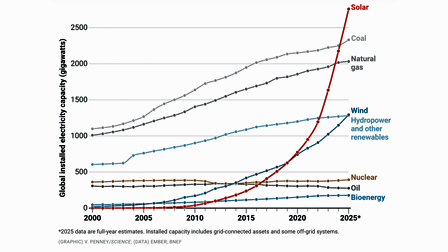
Science magazine named the renewable energy surge as its “2025 Breakthrough of the Year.” This chart shows the astounding growth of installed capacity that has been driven by falling prices of solar and other renewable sources. 

Notable Video

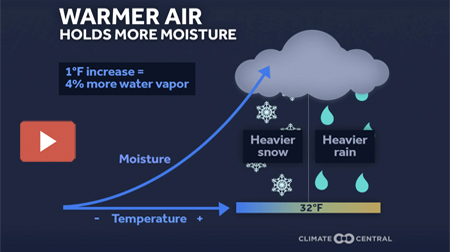
Ice, snow, polar vortex – they’re all connected to climate change, and they merged Jan. 23-25 to sweep the country in a major winter storm. This Climate Central video provides a terrific explanation of how warming global temperatures impact cold weather events.

C-Change Conversations helps people understand the science and risks of climate change and why it matters in daily life.

We frame climate change as a human and community issue – not a political one – and discuss its impacts on our jobs and economy, our health and safety, and our geopolitical stability, as well as the solutions that offer us a safer future.

C-Change seeks to bring everyone to the table for shared understanding about climate change. You can be a part of the conversation by sharing this newsletter with family, friends, and colleagues and by inviting us to talk to your community. 

Read More
House Snow 250

Weatherizing Your Home: a Win-Win for the Climate and your Wallet

B-Change: Weatherizing your home is a

win-win for climate and wallet

By Karen Dougherty

Has anyone else noticed their energy bills creeping up? In some parts of the country the increases are downright alarming. What if you could lower those bills and help tackle climate change at the same time? If that sounds appealing, read on.
 
For nearly all of us, keeping our homes comfortable requires energy. Despite relocating from the Northeast to the Southeast to escape the unforgiving winters, I still run my heat a lot this time of year. Energy use creates emissions, and for most households, our biggest energy hogs are heating and air conditioning. Even for those of us using electric heat pumps, the electricity often still comes from a grid that relies on fossil fuels.
 
Reducing energy use at home does double duty: it cuts expenses and it reduces heat-trapping emissions. That’s a win most of us can get behind.
 
So how can we stay cozy without cranking the heat or AC? In a word: weatherizing.
 
Weatherizing our homes is a surprisingly effective climate solution. And it’s a cost-effective one, too. Best of all, it makes an immediate impact. Don’t own your home? No problem. Most of these tips still apply to renters. The two main strategies are simple: seal and insulate. Here are a few places to start:
 
Seal
 
Air leaks are sneaky, but fixing them can make a noticeable difference.

  • Caulk and weatherstrip around windows, doors, and trim.
  • Check for gaps around dryer vents, plumbing, attic access points, and electrical outlets (foam gaskets are cheap and easy to install).
  • If daylight peeks in around your door, a door sweep or fresh weatherstripping usually does the trick.
  • Don’t forget your attic. Seal it like the rest of your home.

Insulate
 
Seal first, but insulation is where the real savings happen.

  • Attics are priority #1. Heat loves to escape upward, so adding insulation here is often the biggest bang for your buck. There are several options to choose from based on your specific situation.
  • In basements or crawlspaces, consider adding rigid foam or spray foam insulation.
  • Insulate your water heater and hot water pipes.
  • Walls are tougher to DIY, but blown-in cellulose can make a big difference in older homes.
  • Take stock of your windows. Thermal curtains or cellular shades really help. In colder months, open shades on south-facing shades during the day and close them at night (reverse this in summer). Applying window film is also surprisingly helpful at cutting winter drafts.
  • If your windows are ancient and leaky, consider replacing them with double-pane. This is a pricey decision, so you can try insulating first if you’re not ready to invest (or if you are living in a rental).

For those who want to be thorough, you might consider a professional home energy audit. This would give you a comprehensive assessment of where you are using and losing energy in your home along with a plan to make changes.

If you’ve been following this B-Change blog, you may have noticed a recurring theme: many of the actions we can take to help reduce the effects of climate change also make our lives better. I call those win-wins. Why not give a few a try and see for yourself?
 
In addition to volunteering for C-Change, Karen blogs about climate change at unheating.com

Read More
Warming AAS

What is the Progression of Global Warming?


By Nadir Jeevanjee

Nadir Jeevanjee is a climate scientist in Princeton University’s Program in Atmospheric and Oceanic Sciences. He has a background in theoretical physics and currently studies clouds and radiation in the climate system. He works for NOAA’S Geophysical Fluid Dynamics Laboratory, a major U.S. climate modeling center. Nadir is active in communicating climate science to non-specialists and to the public, both through his own talks as well as through the outreach group Climate Up Close

Nadir has answered two related questions:

Q 1:

Net zero (where CO2 emissions = C02 removal) is predicted to stop progressive warming of the planet, (regardless what the atmospheric CO2 will be when that equilibrium is reached). My suspicion is that there is a threshold concentration of atmospheric CO2 above which warming will occur. In other words, if warming was negligible at 325 parts per million (ppm) (early 1970s) and warming was established at 350 ppm (1988), as long the atmospheric concentration is above 325-ish, global warming will progress. Is this not true and why?

Q 2:

How much will temperatures rise in the next 10 years and what are the reasons?

A:

There are a few questions here. The first is about how much warming one can expect on a short time scale (e.g. a decade or two). Global warming is driven mostly by carbon dioxide, which has been increasing at a rate of roughly 20 parts per million (ppm) per decade. We can then estimate (via, say, Eqn. 21 here) a corresponding warming rate of about 0.15 Celsius per decade. This is a gradual increase that accumulates over time, leading to the roughly 1.3 Celsius of total global warming we have now.

It is not the case that warming was “negligible” in the 1970s but then all of a sudden became significant in the 1980s. Rather, there are natural year-to-year fluctuations in the Earth’s mean temperature (mostly due to El Niño), which means that the warming of roughly 0.5°C in the 1970s was hard to discern relative to the natural noise in the Earth system. Once this warming got slightly larger, it started to “poke out” above the noise and some scientists (e.g. Hansen) became confident that this was the global warming signal emerging (see top left panel of Fig. 10.1 here).

Regarding the validity of the net zero paradigm: Earth system models show to a good approximation that zeroing out emissions is both necessary and sufficient to halt global warming (see e.g. Fig. 1 here). This is true no matter what the CO2 concentration is when net zero is reached. Note also that CO2 concentrations in the atmosphere won’t remain constant after net zero; they will instead decline for some time, as the ocean and land biosphere continue to take up the CO2 we’ve already emitted. 

Read More
CNN snow 360

November/December 2025


Dear Friends

At a time of year when we come together with friends and family, our thoughts turn to the importance of hearth and home. Our homes are so much more than four walls: they are the place where family memories are created and community is built. They are also usually our biggest purchase and our most important financial asset. That’s why it is critically important we protect our homes from climate change’s physical and economic damages.

Many people know that climate change can harm our homes in a wide variety of ways: from longer and hotter heatwaves, torrential rainstorms, more powerful hurricanes, fiercer wildfires, stronger windstorms, bigger hailstones, and higher sea surges in coastline communities.

But many don’t realize that these physical challenges are putting pressure on our insurance system, and that fact is beginning to impact the value of our homes and other investments. Insurance only works if the costs are high enough to reward the insurance company for taking the risk and low enough to be acceptable for a wide swath of policyholders. In many markets, we are crossing that threshold – insurance companies deem the risks too high because of climate change and policyowners across the country are finding themselves shut out of the market or paying through-the-roof premiums.

This is clearly bad news for individual homeowners and for vulnerable communities but also has worrisome implications for our whole economy. Insurance anchors many of our investment systems. As insurance becomes too expensive or unavailable, home values decline. As home values decline, other financial markets, like mortgage-backed securities and municipal bonds, can also be negatively impacted. On top of that, without insurance, banks cannot make long-term loans.

This snowball effect is creating a serious threat – the Federal Reserve chair has already warned that in the next 10-15 years, many climate-vulnerable areas may be uninsurable and bank loans and mortgages unavailable.

To meet the challenge, we will need to spend more on hardening our homes and infrastructure and face the heartbreaking decision of letting some communities go. The longer we wait, the harder it gets. The sooner we act, the safer – and more financially secure – we will be.

Sincerely,
Kathleen Biggins
Founder and President

Notable Quote

“Homeowners don’t appreciate or don’t understand that we are living in a much riskier world than we were 25 years ago. And that risk? They have to pay for it.” 

– Benjamin Keys, PhD, professor of real estate, Wharton School of the University of Pennsylvania 
 
News of Concern

As we prepare for climate change’s long-term threats to our homes, we also have to meet a looming short-term threat: keeping our heat and lights on this winter. As skyrocketing demand from new AI data centers strains our antiquated, fragmented grid, utilities and companies are scrambling to secure enough energy sources.

The Trump administration has reacted by supporting coal plants and old nuclear plants running past closure dates, expanding offshore oil and gas drilling, establishing new natural gas pipelines and plants on the grid and as stand-alone units at production centers. We should note, there is bipartisan support for new nuclear and geothermal power – two important clean-energy sources that hold significant promise. While we desperately need more energy supply on our grid, our choices today have repercussions for the world we will have tomorrow. We need to be charting a path that protects both.

At the same time the federal government is pushing to amp up offshore oil and gas drilling – something even conservative lawmakers are wary of – the administration also wants to weaken EPA protection of our rivers and wetlands. Not only are these bodies of water critical for clean drinking water, wetlands are a major carbon sink, sequestering carbon dioxide 10 times faster and up to five times more than tropical forests.


The link between climate change and water may be even tighter than many realize. The warming temperatures are causing massive glacier melt – with a recent study showing one glacier in Antarctica, Hektoria, receded five miles in two months, losing half its ice at a rate that shocked scientists and has worrisome implications for accelerating sea level rise. And at the same time, glaciers in mountainous areas like the Alps and Himalayas are melting rapidly, creating hazards for mountain towns that are being washed away by the glacier melt. As deadly as these glacial floods are, they are a prologue to a much bigger looming threat. Glaciers are the “water cooler” for many countries. Every year, billions of people downstream harvest glacial melt for drinking water, agriculture, and manufacturing. What will happen to water resources when the glaciers fully melt away?

Climate change is affecting every single one of us – yet we seem unable to chart a safe course to lower emissions quickly enough to stay at safe levels. We are at the cusp of crossing the 1.5°C threshold where scientists warn natural systems will change more radically. For the moment, it feels as if fossil fuel interests are winning the day – COP30, the annual UN climate summit that was held last month, ended with a whimper, without even a mention of weaning off of fossil fuels, a retreat from past years’ promises to “transition away from fossil fuels.” 

Our foot dragging has real-world repercussions. The United Nations’ Refugee Agency reports about 250 million people have already been displaced due to weather-related disasters in the past decade. Humanitarian agencies are struggling to keep up (their efforts are also hampered by climate-related issues like supply chain backlogs and damaged infrastructure) and countries are ill-prepared to handle the sheer numbers of refugees, let alone the conflict that arises with such massive migration. And since we know that weather disruptions will get much worse as temperatures continue to rise, we expect migration pressures will ratchet up in the future.

 
News of Hope
Despite President Trump’s championing of fossil fuels, the U.S. is still installing clean energy at a rapid clip. Renewables are projected to deliver 84% of all new electricity additions through mid-2028. Thanks to a reshoring of manufacturing, we now create all parts of the solar supply chain right here at home – giving us greater independence and energy security. And a massive amount of battery storage (three times more than we currently have) is projected by 2030. Batteries are critically important in stabilizing the grid, and they enable renewables to pick up a larger part of our electricity mix. 
 
As the U.S. sees a surge in demand for electricity, that need is spurring innovations like networks of home batteries that can both help stabilize the grid and drive down consumer costs. In Texas, for example, one energy startup has created a model in which customers lease in-home batteries to collect surplus energy that they sell back during periods of peak demand. This “virtual power plant” arrangement is a win for the customer and the utility.
 
Another potential energy hero? Offshore wind. A recent study shows offshore wind is well-suited to meet our electricity needs in cold weather, which is a time of year that natural gas most often fails due to supply chain issues. That’s because we use natural gas for heating and electricity during those months – and much of our gas infrastructure is not winterized. Interestingly, offshore wind also peaks in the morning and evening hours, when energy demand surges as people turn on their heat. It’s a simple tradeoff. If the administration continues to curtail new offshore projects, costs will go up, and energy security will be compromised.
 
And, importantly, many of the world’s fastest-growing economies are pivoting to renewables and batteries for larger portions of their energy mix. Because China – the world’s “renewable energy superpower” – has made cleantech so cheap, developing countries like India, Nigeria, Morocco, Turkey, and Vietnam are beginning to prioritize renewables over fossil fuels for their economic development. The fact that this shift is  being driven by economics and energy security rather than climate concerns  is actually good news.
 
Speaking of good news, we’d like to tip our hat to our friends Down Under. Australia is rapidly decarbonizing its grid and continues to think outside the box. In a novel move, the country is giving away three hours of energy – for free! – allowing households in parts of the country to run energy-hungry appliances and charge cars at no cost during peak solar hours.
 
Moving the dial on climate change means holding our governments accountable for their actions. A precedent-setting ruling by the European Court of Human Rights may help – it declared that governments must assess the global climate impact of new fossil fuel projects before allowing new drilling fields to open. It’s an important step toward protecting our climate and the health of our planet.
 
Finally, there’s been much buzz over AI and its negative impact on our climate, from the energy and water it guzzles to the emissions it creates. But there’s a climate upside to AI, too. It can help us identify the best places to build geothermal plants, show us how to speed up our quest to create energy through fusion, and create plans that help businesses of all sizes pollute less and use energy more efficiently. While AI poses real challenges to our energy systems, we shouldn’t forget it can accelerate solutions as well.
 
Notable Graph

Economic experts say there’s no ambiguity here – without wind and solar, the U.S. is unlikely to meet our power needs. That reality is driving investment and business interests, even as the Trump administration’s focus is on increasing fossil fuel use. Read more here.

Notable Video

 Source: Civil Mentors, YouTube

Could Saudi Arabia transform from a scorching desert to a green oasis? The country’s ambitious plan would significantly reduce greenhouse gas emissions and lower temperatures in one of the hottest regions of the world. Let’s see whether this dream evolves into reality.

Read More
Gates 250

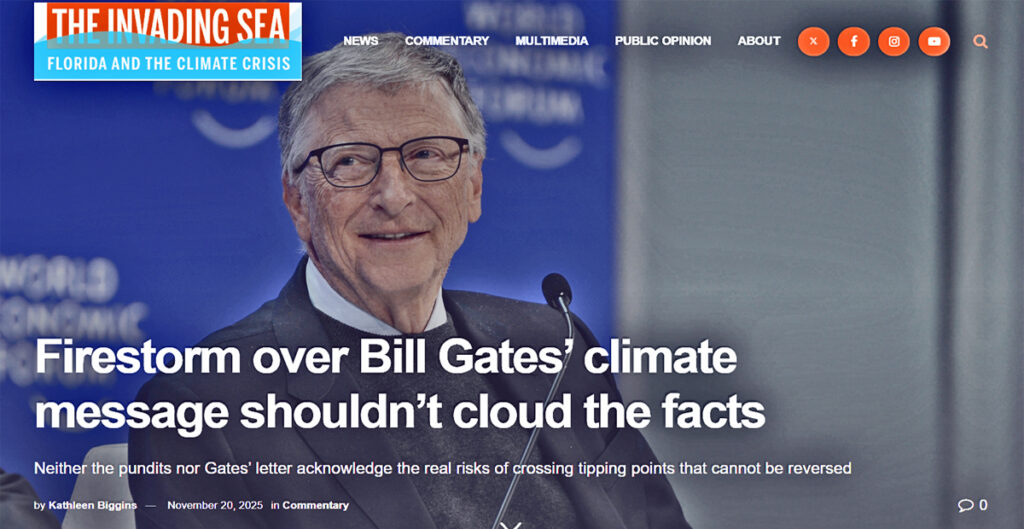
Bill Gates’ Climate Message Shouldn’t Cloud the Facts


By Kathleen Biggins

Did you hear the news? Climate concern is dead! No need to worry, because the Tech Titans have it in hand and the issue will be solved in a decade. New tech has already bludgeoned our emissions trajectory into submission, and we are now on a relatively safe path! Humanity is going to be fine!

At least that’s what conservative pundits and politicians gleefully wrote about Bill Gates’ letter to COP30 negotiators. Gates wrote that while climate change is a “serious problem,” it is not the inevitable end of civilization and that we should set targets that ensure human health and economic prosperity versus setting temperature targets such as staying below a 2 degrees C increase. He noted doomsday messaging can turn people off, and technology holds great promise. 

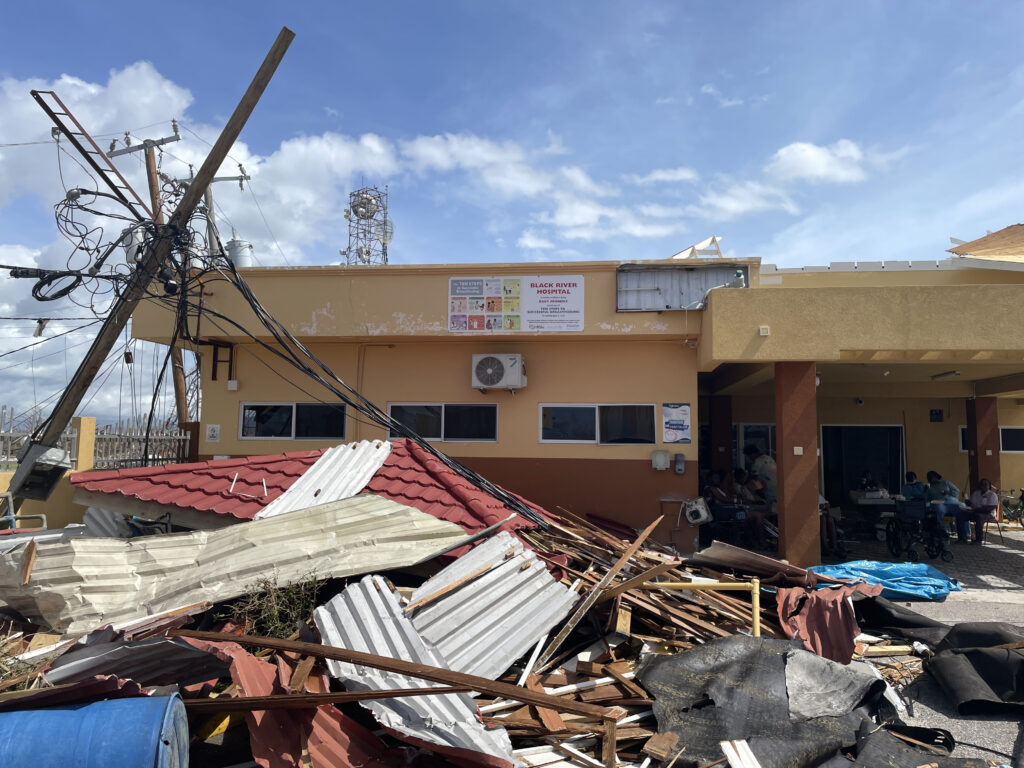
Damage in Jamaica from Hurricane Melissa (Pan American Health Organization, CC BY-NC-ND 4.0, via flickr)
Hurricane Melissa was a a climate-infused Category 5 storm when it battered Jamaica. (Pan American Health Organization, CC BY-NC-ND 4.0, via flickr)

The letter set off a firestorm. Deniers are heralding it as proof that climate worry is inane, while scientists and climate communicators are lambasting it as underrepresenting the risks and providing fodder for deniers. Others believe Gates was “ponying up” to the administration, throwing climate change under the bus to try to protect funding for antipoverty and health initiatives. 

Poignantly, on the same day that Gates published his letter and the blogosphere started to erupt, a climate-infused Category 5 hurricane battered Jamaica, with early reports indicating 30% of the country’s GDP has been obliterated. Just a few days later, Vietnam experienced an unprecedented rainfall – 5.6 feet in 24 hours – that caused widespread flooding, deaths and agricultural loss.  

While we sit here arguing about how to think and talk about climate change, nature is continuing to do her new dance – jiving outside the lines that we have always thought constrained her. And whether it ends civilization as we know it or just makes life incredibly hard for future generations, it’s not going to be good.  

Let’s look at some basic facts: 

  1. This trajectory is NOT safe

Bill Gates notes we are on a trajectory for our average global temperature to increase 5.22 degrees F (2.9 degrees C) by century’s end. That 5.22 degrees F increase is an average of land and sea temperatures, so it’s going to be a lot hotter than that on land, which means a large chunk of our country will feel like living in Saudi Arabia.  

It also means that in the not distant future, swaths of our country will be too hot and humid for even the healthiest of humans to be safely outside for long periods of time. That is probably going to crimp fall football – and it’s not great for farming, construction, forestry, or the safety of our police and soldiers who work outside, either.

The oceans will get very hot, too, with tropical water temperatures projected to migrate up to Georgia by century’s end, and to Boston by the end of the next century. These rapid and extreme temperature swings will make it harder for many species – including our own – to thrive. 

  1. The pain is just beginning 
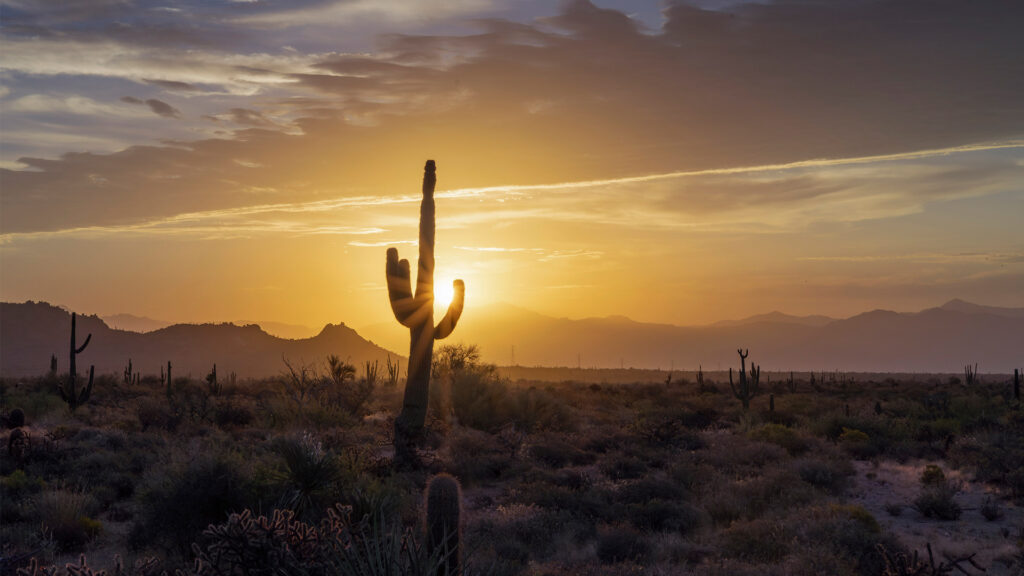
Phoenix experienced 113 consecutive days of 100 degrees or higher in 2024. (Ray Redstone, CC BY-SA 4.0, via Wikimedia Commons)
Phoenix experienced 113 consecutive days of 100 degrees or higher in 2024. (Ray Redstone, CC BY-SA 4.0, via Wikimedia Commons)

Scientists have warned for decades that crossing the 1.5 degrees C increase was a critical point – beyond it, climate impacts will get much worse. So the impacts we are living with now – rising oceans washing away beach homes; intense rains inundating “safe” mountainous places like Asheville, North Carolina; Phoenix’s 113 consecutive days of 100 degrees or higher in 2024 – are really just an “amuse bouche,” a taste of what’s to come as we push nature out of the norms we’ve always known. 

  1. Tipping points are real and irreversible 

Neither the pundits nor Bill Gates’ letter acknowledge the real risks of crossing tipping points – significant changes in our natural world on a grand global scale that cannot be reversed. Which should we be the least concerned about?  Lifeless skeletal coral reefs in the tropics? Rapidly melting glaciers and ice sheets (5 miles in 2 months in Antarctica)? The Amazon rainforest – the “lungs of the world” – turning into savanna? 

  1. Older technologies are the climate heroes  

Solar and wind – not the shiny new stuff of Bill Gates’ dreams – are a big reason our emissions trajectory is down. Since the Paris Agreement in 2015, we’ve flattened our emissions trajectory, potentially lowering our future warming by almost 2 degrees F.

Wind, solar and batteries are the chief workhorses, picking up almost all new energy demand globally and bringing savings and more energy independence to those who adopt these technologies. As of this year, humanity will get more electricity from renewables than from coal. Even Texas, the nation’s fossil fuel mecca, is now powering its economy on 40% renewables, crediting solar and batteries for keeping the air-conditioning humming during its brutal summer heatwaves.

Renewables are growing exponentially because they tap into unlimited power sources, can be produced locally and are more affordable than fossil fuels. And they are also proving to be quite reliable. California added so much new renewable capacity last year that it ran its economy on 100% renewables for 132 days in 2024 without a single grid failure. It also is significantly lowering electricity generation costs – an important goal because the wildfire mitigation and infrastructure investment that are necessary due to climate change are driving energy distribution costs up.  

  1. Shiny stuff does hold promise – but we’re not there yet

There is much to get excited about – including geothermal, fusion and new types of storage – but are we ready to bet the farm (aka our planet) on it? And those technologies cannot be built fast enough to make a difference NOW, when energy demand is burgeoning due to AI and data centers and fossil fuels plants are coming back in vogue in the United States.

We need smart policy and investment to get the shiny stuff tested and scaled, but we also need more of what’s already working. We don’t need our government picking “winners and losers” – to borrow a phrase – and preventing the build-out of the cheapest and most abundant energy technologies we have, especially at a time when prices are skyrocketing.

Kathleen Biggins

Climate change makes it harder for all of us to stay safe, healthy and economically secure. We need a stable climate in order to have prosperous, healthy communities. Our “human systems” (agriculture, finance, insurance, water management, health care, urban planning and construction) all depend on predictable norms of how the natural world works – how hot and cold it will get, how much rain will fall, how strong storms will be, how crops will grow, what diseases we face. And that foundation is critical not just for the impoverished (Gates’ main concern) but for all of us on the planet. 

Conservative pundits who disparage climate action are using Gates’ letter to inflame their base and drive up readership. But in doing so, they are telling vulnerable people not to worry – and not to prepare.

We all know it’s wrong to shout “fire” in a movie theater when there is no danger. What about the opposite? With heat and smoke filling the theater, these misguided pundits – and Mr. Gates – are telling their readers to sit down and enjoy the show.  

Kathleen Biggins is the founder and president of C-Change Conversations, a nonprofit organization dedicated to promoting productive, nonpartisan discussions about the science and effects of climate change.

Banner photo: Bill Gates takes part in a panel at the World Economic Forum in Davos, Switzerland, in January 2024 (Republic of Colombia, Public domain, via Wikimedia Commons).

This is a repost of a blog published in The Invading Sea newsletter.

Read More
smoke stack 250

The Fight Over the Endangerment Finding

Guardrails for a Warming World: The Fight Over the Endangerment Finding

by Nancy Ylvisaker

The Trump administration has threatened to roll back a crucial finding that determined that greenhouse gases endanger human health and can be regulated under the Clean Air Act. Issued in 2009, the Endangerment Finding gives the government the authority to regulate and limit power plant emissions and methane leaks and to set fuel-efficiency standards for automobiles. A rollback would have massive implications for climate regulations – and our safety.

In the following blog, author Nancy Ylvisaker details the risks inherent in rolling back the Endangerment Finding. A past board member for C-Change Conservations, Nancy is deeply engaged in conservation advocacy, serving on the boards of the Nature Conservancy in Missouri, Center for Plant Conservation, Coastal Mountains Land Trust, and the Conservation and Science Mission Council of the Missouri Botanical Garden. She is the current Conservation Chair of the Garden Club of America. Professionally, she worked in finance at J.P. Morgan and Merrill Lynch in NYC for many years.

In addition to sharing Nancy’s thoughtful blog, C-Change Conversations responded directly to the EPA, joining a wide range of health organizations and nonprofits that submitted public comments in opposition to rescinding the Endangerment Finding. Karen Florini, C-Change Conversation’s strategic advisor, wrote the official response outlining our position. You can read it here.

When parents imagine the future for their children, it’s often in everyday terms: clean air to breathe, safe water to drink, a stable world to inherit. In the United States, one of the most important legal tools designed to protect that future is something most people have never heard of – the Endangerment Finding.

Issued in 2009 by the Environmental Protection Agency (EPA), the Endangerment Finding declared that greenhouse gases (GHG) – including carbon dioxide, methane, and nitrous oxide – “endanger public health and welfare.” It arose from a Supreme Court case two years earlier (the landmark Massachusetts v. EPA case, 549 U.S. 497) in which the Supreme Court ruled that if greenhouse gases threaten the public, the EPA is obligated under the Clean Air Act to regulate them. The Endangerment Finding was the government’s formal acknowledgement that climate pollution meets that test.

For more than 15 years, the finding has served as the legal foundation of U.S. climate policy. It gave the federal government the authority to set climate pollution standards for cars and trucks, tighten limits on power plant emissions, and regulate methane leaks. In doing so, it helped push technological innovation, lower consumer costs, and reduce greenhouse gases, even as the population and economy grew.

Today, however, there is a push to demolish that foundation. In July 2025, EPA Administrator Lee Zeldin issued the agency’s proposal to repeal the Endangerment Finding. A Department of Energy (DOE) report released with the proposal argued that:

1. Reducing emissions in the U.S. would have little to no effect on global climate change.
2. The impacts of greenhouse gases are uncertain or far in the future.
3. Enforcing limits on emissions would cause economic harm.
4. Higher carbon dioxide levels might benefit agriculture.
5. It isn’t clear that climate change harms human health and welfare, or that the
    harms aren’t outweighed by the benefits, and therefore the EPA doesn’t have the 
    authority to regulate greenhouse gas emissions.

Many scientists responded swiftly to the DOE report and the proposed repeal of the Endangerment Finding, saying the report misrepresented decades of research and that the harms of greenhouse gases – from health impacts to economic losses – are already evident and will grow exponentially as temperatures continue to rise. Further, arguing that cutting emissions in the U.S. won’t make a difference to global climate change ignores that the U.S. is the world’s second-largest annual emitter behind China and cumulatively has produced 70% more emissions than China, according to the EPA. And critically, supporters point to the Endangerment Finding’s success in bending emissions trends down while encouraging innovations that have benefited both consumers and industry.

What the Endangerment Finding has Achieved

With its mandate to reduce emissions, the EPA previously focused on the two top sources in the United States – transportation and electricity generation, which together account for about 55% of emissions (EPA’s GHG Inventory). Within a decade, new regulations made a difference. Since 2007, when emissions peaked in the U.S., to 2022, emissions have declined by 17.8% according to the Center for Climate & Energy Solutions, despite the population expanding by 10.5% and economic growth of 30.1% (Macrotrends).

A. Transportation: Gains at the Gas Pump, Profits to Corporate Bottom Lines

After the Endangerment Finding was instituted, the EPA and the National Highway Traffic Safety Administration tightened Corporate Average Fuel Economy (CAFE) standards and set GHG emissions for new cars and light trucks. Automakers responded with more efficient engines, hybrid systems, better aerodynamics, and lighter materials. The results were dramatic:

● New vehicle emissions fell by 40%. Whileartially offset by Americans’ turn to SUVs and trucks, emissions still remained 30% lower.
● Average fuel economy rose from just under 20 MPG in the early 2000s to 25 MPG
even with the SUV boom.

Analysts estimated drivers would save $6,000 to $8,000 in fuel costs over a car’s lifetime – hundreds of billions of dollars when measured across the American fleet, many times more than compliance costs, which were pegged by the EPA at $1,000 to $1,800 per vehicle.

Nor did cleaner cars mean weaker car companies. The industry innovated and adapted, and even under the tougher rules, and the pandemic in 2020-2021, automakers have continued to thrive.

B. Energy Generation: Lowering Smokestack Pollution

The electricity sector tells a similar story. Since 2005, power plant CO2 emissions have fallen by a third, even as the grid has worked to keep pace with higher consumer demand and a digital economy hungry for electrons. Nor has there been sticker shock from cleaner air: according to the EPA, electricity prices closely tracked inflation through 2024 (although that changed in 2025 with large natural gas exports and AI growth).
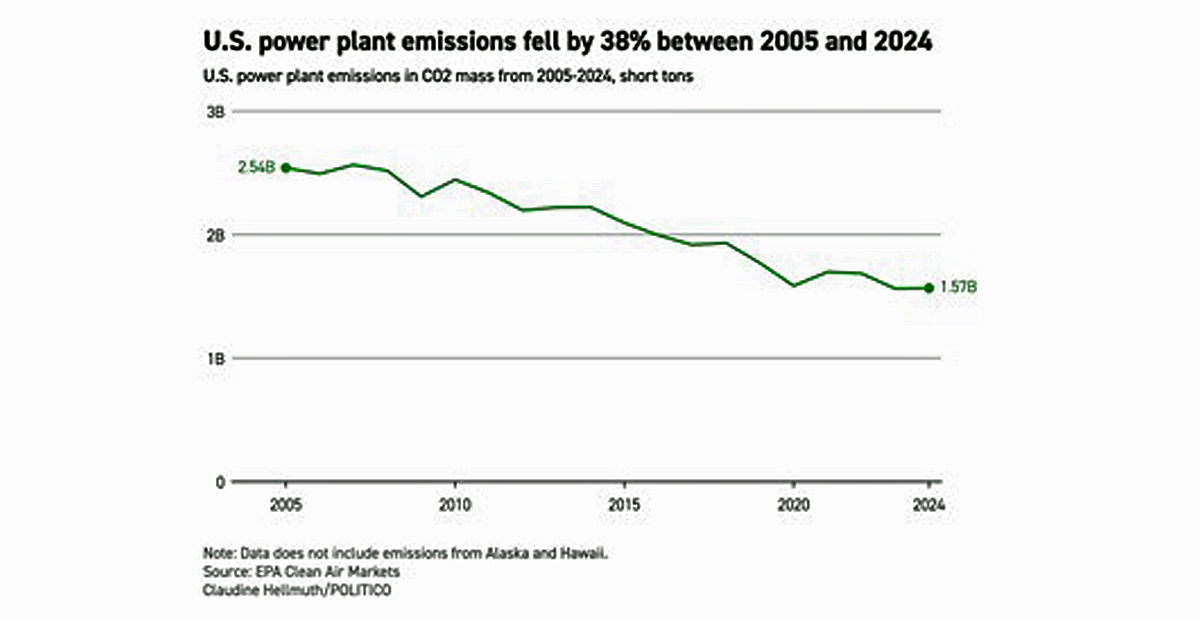
Source: EPA

Clean Energy: A Competitor for the Record Books

The Endangerment Finding rules have also worked in favor of clean energy. Fifteen years ago, skeptics could plausibly wonder whether wind and solar would ever compete on cost. That debate is over. The cost of new onshore wind and utility solar has fallen by more than 70% and 90% respectively in 20 years, and according to Lazard, they are now the most cost-effective forms of new-build energy generation on an unsubsidized basis (i.e., without tax subsidies).

And the grid itself is evolving. Grid-scale battery storage, nearly absent a decade ago, is now firming solar output in the afternoon and pushing clean power into the evening peak. According to IRENA, the International Renewable Energy Agency, in 2024 90% of new power capacity was coming from renewable sources. Utilities have learned that a cleaner grid is not an unreliable grid; it is a different grid – more digital, more efficient and flexible, incorporating advanced forecasting, sophisticated demand response, and local networks. And with AI’s sophisticated, almost instant ability to manage information comes the potential for almost seamless integration of energy sources, whether gas, solar, hydro, oil, or wind.

The New Energy Reality: It All Works Together

Tighter standards have not strangled the American energy sector as some have feared. U.S. oil and gas production reached record levels even as vehicle and power plant rules tightened since greenhouse gas standards for methane emissions were put into place in
2016. According to the U.S. Energy Information Administration, U.S. gas production has increased by more than 40% (EIA Dry Natural Gas Production) and oil production by just below 50% (U.S. EIA Field Production, Crude Oil.) And oil and gas companies have continued to post strong profits. While there were large declines in 2014-2015 due to the OPEC shale supply war, and in 2020 due to COVID, profits rebounded hugely, normalizing in 2023 and 2024. Profitability remains above historic averages, and in 2024 alone, profits of the five largest oil companies in the U.S. exceeded $75 billion.

The Costs of Delay: Billion-Dollar Disasters

Endangerment Finding regulations are framed by some as a choice between costs now weighed against uncertain benefits later. But the cost-benefit ledger is already unbalanced, and becoming more so as clean energy surges, helping lower emissions.
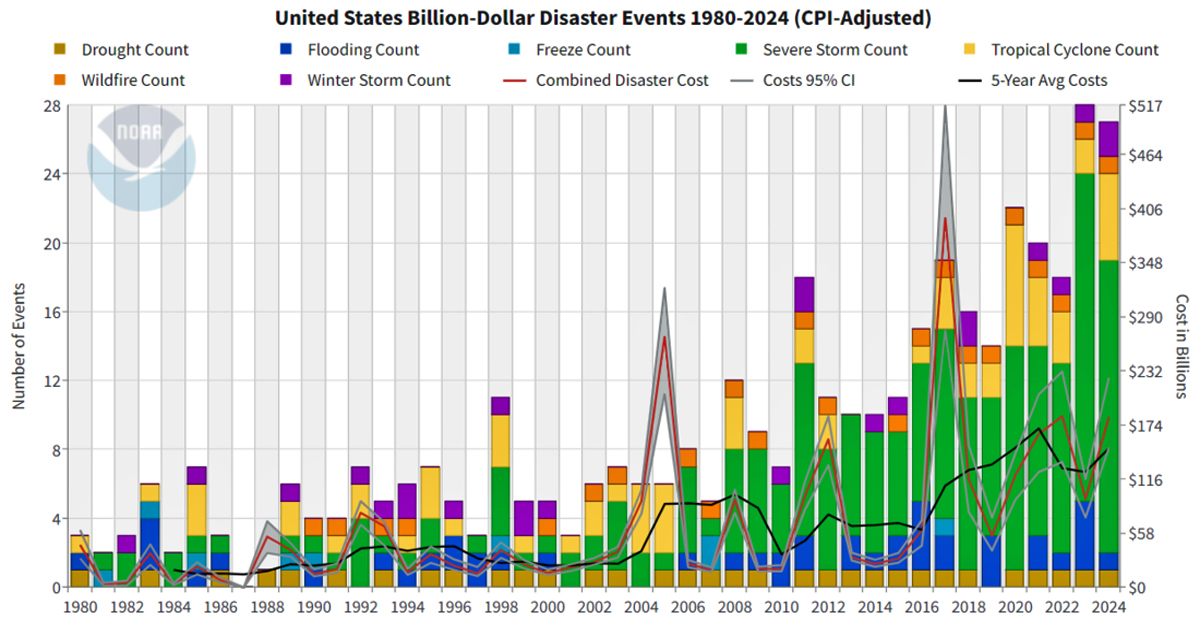
Insurance Markets, Priced to Risk, are Flashing Red

Insurance markets reflect the scale of increasing costs. In markets exposed to growing risks of fire, floods, and drought, premiums have jumped steeply. After the January 2025 Los Angeles County fires, State Farm reported $1 billion in payouts and received a 17% rate hike; Allstate, a 34% hike (CA Dept. of Insurance 2025). In Colorado, the average insurance premium increased by 60% between 2017 and 2023. In some places, major carriers have simply stopped writing new policies altogether.

As noted by Federal Reserve Chairman Jerome Powell in February 2025, banks and insurance companies are “pulling out of coastal areas, areas where there are a lot of fires… So what that’s going to mean is if you fast-forward 10 or 15 years, there are going to be regions of the country where you can’t get a mortgage.”

According to scientists, insurers, and economists, if we do not continue to reduce greenhouse gases, projected losses and costs will be multiples of what we see today.

Threat to our Food System and our Security

Among the arguments for repeal of the Endangerment Finding is that CO2 enhances plant growth, so higher emissions would increase agricultural output. It’s accurate that CO2 is used to stimulate plant growth in greenhouses, and modest increases in CO2 appear to stimulate growth of some food crops under ideal conditions. But higher CO2 levels also decrease protein and nutrient content in most grains and any benefits of yield increases are overwhelmed by severe heat, drought, and irregular rainfall. Corn, the nation’s most valuable crop, cannot germinate if soils are too hot – earlier and longer heat waves are already cutting into yields.

Cornell University estimates that global warming has decreased agricultural yields by 20% since 1961. The U.S. “breadbasket” states, which produce a third of the world’s corn and soybeans, will face even greater harvest losses by mid-century, and global yields could decrease up to 24% by 2100, according to a study in Nature.

Food and water insecurity will become a national security issue as well, sparking conflict and refugee crises. Former Department Of Defense Secretary James Mattis in 2021 stated: “Climate change is impacting stability in areas of the world where our troops are operating today.”

Our oceans, too, tell a cautionary tale. They have absorbed more than 90% of excess heat, and are now warmer and more acidic than at any time in modern history. Coral reefs – nurseries for a third of the ocean’s fish – are bleaching at record rates, 50% of oxygen-producing kelp forests have disappeared, and algal blooms create massive dead zones for fish. Seas that are 8-9 inches higher than 140 years ago are pushing tides further inland, threatening ports, bases, and neighborhoods. Saltwater intrusion from rising tides also compromises groundwater and agriculture.

Health Consequences that Hit Close to Home

Scientists and physicians say health burdens stemming from GHG emissions are profound and rising. While not a greenhouse gas, up to 25% of air pollution’s particulate matter (PM) is composed of black carbon, which is produced by incomplete combustion of GHG. The fine particulate matter generated by burning fossil fuels (PM 2.5), is especially dangerous to human health because it lodges deep in the lungs, causing irreversible damage. The World Health Organization (WHO) estimates that air pollution claims more than four million lives a year.

Heat adds another burden. The Lancet, a major medical journal, estimates extreme heat contributes to almost half a million deaths annually, a toll projected to triple by mid-century. Vector-borne diseases – dengue, malaria, and West Nile – have all moved northward in the United States. By 2080, The Lancet’s Countdown on Health and Climate estimates that 60% of the global population could be vulnerable.

The Economy-Wide Toll

Experts warn that these impacts will threaten economic prosperity. Insurer Swiss Re projected U.S. GDP losses of up to 18% by 2050. BlackRock and the Rhodium Group estimated that without action on emissions, global output could fall by 25% in the second half of this century. These forecasts include reduced labor productivity, storm losses, higher health costs, and damage to infrastructure. For investors and insurers, climate change is not a distant problem but a systemic risk already shaping markets.

Swiss Re’s Projection of Impact of Drought on Global Productivity
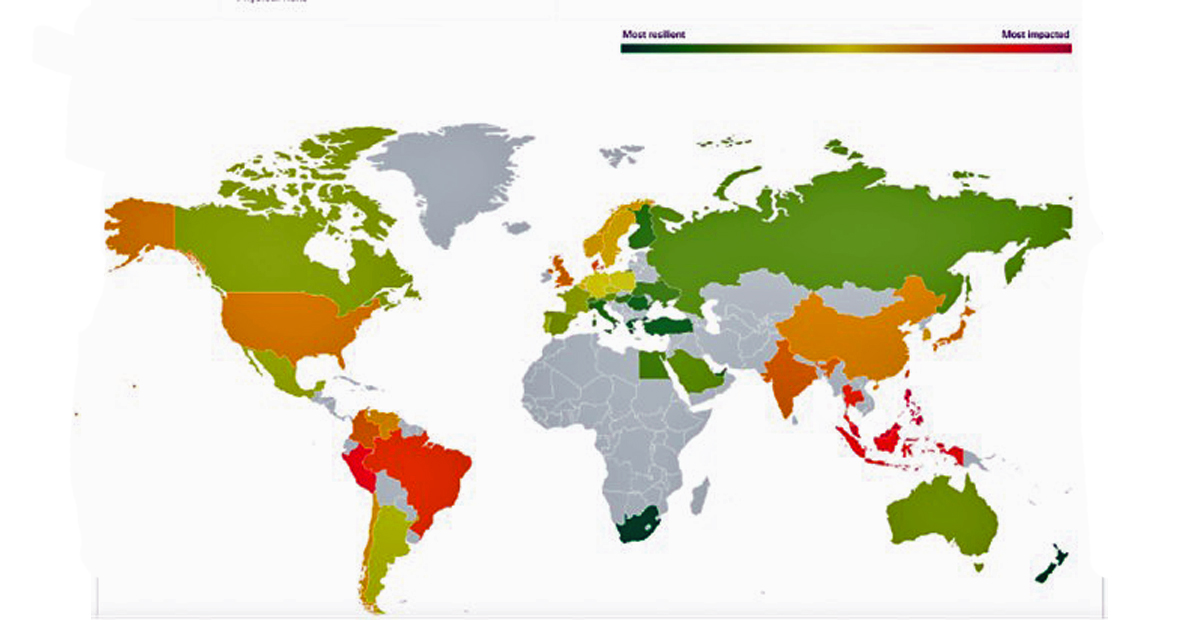
Source: Swiss Re

The Endangerment Finding has become a symbol in a polarized debate, but it was designed by Congress as a practical tool. Supporters argue that it has worked: emissions are down, technology has advanced, industries have adapted, and consumers have saved money. Critics contend that it imposes costs and extends environmental law beyond its original intent.

The choice before policymakers is whether to maintain the guardrails or remove them. Repealing the Endangerment Finding would not alter the physics of greenhouse gases, or stop the rising costs of emissions. What it would do is strip away the EPA’s ability to respond. Scientists and conservation organizations argue this will leave the country unprepared as harms accumulate.

The Endangerment Finding will not solve all of our climate ills. But it reflects an underlying promise between government and citizens: when there is a clear threat, the government will respond. Its repeal would mark a retreat from that promise. The decision now rests with policymakers – what they choose will shape not only the trajectory of U.S. regulatory and climate policy, but the health, security, and prosperity of future generations.


Read More
Podcast

Reframing the Climate Conversation

It can be tough to talk with skeptics about climate change, even when (sometimes especially when) they’re your friends and family. On a recent episode of the “Future of Sustainability” podcast (you can listen here), host Michael Hanf interviewed C-Change Conversations Founder and President Kathleen Biggins about strategies for productive communication that gets past partisanship to build consensus. In addition to the podcast, “Future of Sustainability” wrote the following blog about C-Change’s approach.
 

Reframing the Climate Conversation
for Consensus and Action

The Future of Sustainability
November 4, 2025

When Kathleen Biggins founded C-Change Conversations in 2014, she was not aiming to build a traditional environmental nonprofit. Instead, she set out to bridge one of the deepest divides in American public discourse: climate change. What began as a group of volunteers worried about the lack of informed dialogue has evolved into a respected organization that has reached more than 23,000 people across 33 states and beyond, equipping communities with a science-based but accessible framework for understanding climate risk.
 
Biggins’ central insight is deceptively simple: climate change is not just an environmental issue. It is a risk-management challenge that affects health, household budgets, business competitiveness, and national security. By shifting the narrative from polar bears and politics to economics and everyday life, C-Change Conversations has carved out a distinctive and effective role in the crowded climate communication space.

A Taboo Topic Made Tangible

In the early days, Biggins and her colleagues confronted a cultural barrier as much as a scientific one. “It wasn’t welcome discussion at dinner parties or even at lunches,” she recalls. “It was really something that was a little bit taboo to bring up.” Yet the risks were too significant to ignore. From rising insurance costs to food price volatility, climate impacts were already shaping households and markets.

The organization’s flagship program, the C-Change Primer, was designed to break through this silence. Structured like a risk assessment, the presentation asks audiences to consider three questions:

  1. How likely is the risk?
  2. What are the consequences if it happens?
  3. How difficult or costly is it to avoid?

By applying this framework, familiar to business leaders, investors, and policymakers alike, C-Change reframes climate change as a practical challenge that demands rational analysis rather than ideological positioning.

Meeting People Where They Are

Biggins emphasizes that different audiences connect with different aspects of the issue. For investors, the conversation often centers on stranded assets, shifting competitiveness, and insurance exposure. For civic groups, the focus may be on family health, household budgets, or community safety. “For some audiences, it’s their family’s safety and household pocketbook issues. For others, it is the big economy and competitiveness,” Biggins explains.

The method is deliberately apolitical. Instead of moralizing or prescribing specific policy solutions, C-Change provides credible data, local projections, and economic analysis, then leaves space for dialogue. This neutral ground has proven especially powerful in conservative communities, where skepticism can be high but concern for children’s futures, jobs, and national security resonates across party lines.

From Division to Dialogue

Perhaps the most striking element of C-Change’s approach is its commitment to respectful engagement. Biggins recalls one event in rural Virginia where a local resident approached her before she spoke, declaring that climate change was a hoax. Rather than dismissing him, she offered ten minutes for him to present his view. “My inclination was to treat him with respect and kindness and then do my thing,” she says. The result: the audience heard both perspectives, but also received a fact-checked, science-based framework that invited them to reflect rather than react defensively.

This approach reflects Biggins’ broader philosophy: the goal is not to win arguments, but to open doors. By focusing on risk, stewardship, and tangible local impacts, C-Change seeks to build the social will that can ultimately unlock political will.

Agency Over Apathy

One of the greatest challenges in climate communication is overcoming paralysis. People may accept the science but feel powerless to make a difference. To counter this, C-Change highlights local and personal actions, ranging from supporting community initiatives like urban tree canopies or electric school buses, to modeling change through personal choices such as installing solar panels or driving electric cars.

“Personal action is contagious,” Biggins notes. “If you put solar panels up, your neighbor is more likely to put solar panels up. If you drive an electric car and say, ‘this is the best thing since sliced bread,’ you can begin to move those around you.”

A Shifting Landscape

Over the past decade, Biggins has seen the climate conversation evolve, but not in a straight line. From outright denial, to reluctant acceptance, to concerns about cost, the narrative has shifted in fits and starts, influenced by politics, media framing, and economic realities. What remains constant is the need for organizations like C-Change to depoliticize the issue and ground it in shared values and credible evidence.

Globally, momentum remains strong. Europe and China are accelerating investments in clean energy but in the U.S., cultural and political headwinds persist. Biggins remains pragmatic but hopeful: “Nobody wants to sacrifice their children’s future. If you can help people understand their responsibility not as partisans, but as human beings who care for the next generation, you create a way forward.”

Building the Next Phase of Dialogue

As climate impacts become more visible, the demand for clear, credible, and nonpartisan communication will only grow. C-Change Conversations offers a model for how grassroots, volunteer-driven initiatives can influence national discourse: not by shouting louder, but by listening more carefully, framing more thoughtfully, and equipping communities to see climate change as the defining risk management challenge of our time.

In an era of polarization, Biggins and her colleagues have built something rare: a framework for consensus. Their work demonstrates that with the right tools, the climate conversation can move beyond denial and despair toward dialogue and determination.

  >> Listen to the full interview on Spotify or your favorite podcasting platform.

Read More
Sign Up for News!