May 2026
Everyone relax! The scientific scenario predicting a grim climate-damaged future has been discredited and retired. No need to worry!
That’s the pablum coming from some conservative media.
Scientists did retire the RCP 8.5 scenario – the “worst-case” climate scenario heralding a potential 3.5–5.5°C (8–10°F) increase by 2100. This grim scenario focused on what could happen if the population kept growing at past rates (it hasn’t) and countries tripled their fossil fuel usage to grow their economies (they aren’t).
Things have changed a lot since 2011, when the first scenarios – a worst-case, best-case, and two in-between cases – were laid out. At that time, emissions had risen 30% in the prior decade, and China was undergoing an accelerated economic transformation powered by fossil fuels. Today, both China (the world’s biggest emitter) and India (the world’s newest economic powerhouse) are using “electrotech” – the combination of clean energy and electrification – to help grow their economies in a less-carbon-intensive way. They are still using fossil fuels and emitting greenhouse gases, but at a lower rate than projected in the past. And other countries, including the U.S., are integrating more electrotech into their energy systems. The net result? We no longer have to increase fossil fuel usage in order to have economic growth.
But before we celebrate too much, we should note the best-case scenario – that we could keep global average temperature gains below 1.5°C – is likely off the table as well, with most scientific assessments predicting we are heading toward a 2.7°C (5°F) increase (absent dramatically scaled-up efforts to curtail carbon pollution).
Some sobering thoughts on that newer trajectory: that number includes the average temperatures of the oceans and the land, so land temperatures will be significantly higher. In addition, the heating won’t magically stop rising at century’s end. The RCP 8.5 “extreme” temperature increases are now considered unlikely for century’s end but are plausible for 2150. And even at the more moderate 3-degree increase, experts warn of a vastly different planet, with billions of people exposed to lethal heat and humidity, and the potential extinction of a quarter of all known plants and animals.
So yes, it is good news that scientists have concluded that the most dangerous scenario is off the table. Maybe, as critics claim, it was too pessimistic to start. Maybe, as supporters say, the worst-case scenario was an important tool to explore what could happen if we didn’t act. And definitely, it shouldn’t have been incorrectly referred to or considered as the “business as usual” trajectory.
But in the most important ways it doesn’t matter. We are still heading into a much more dangerous and less economically secure future. And this hullaballoo around the projected scenarios is distracting from the climate realities right now: March was the hottest ever recorded, the worst spring drought on record is threatening U.S. crops, and the water woes in the Southwest are becoming epic, to name a few.
So let’s focus on what really matters: not far-away projections but down-home realities. Climate change isn’t safe now and won’t be in the foreseeable future. Retiring the top scenario doesn’t change that.
Sincerely,
Kathleen Biggins
Founder and President
Notable Quote
“In paleo-climate terms, New Orleans is gone; the question is how long it has.”
— Jesse Keenan, an expert in climate adaptation at Tulane University and co-author of a recent paper on sea level rise
News of Concern
This hits hard: New Orleans, one of our most iconic cities, is predicted to be surrounded by water by the century’s end, and experts have warned the city that relocation should start now. And sadly, NOLA isn’t an outlier. Indonesia is already in the process of relocating all government functions out of Jakarta, where a third of the city is predicted to be submerged by 2050. Many vulnerable cities – including Miami, Shanghai, Bangkok, and Venice – are bedeviled by a one-two punch: rising sea levels and severe land sinkage occurring as water is pumped from underground aquifers.
We were also concerned to read:
- As bacteria and other pathogens evolve to survive higher temperatures and changing rainfall patterns, some are becoming more resistant to antibiotics. Experts say this could have sweeping, negative health ramifications for both people, animals, and crops.
Water prices are skyrocketing as extreme rainstorms devastate our reservoirs and pipes, and severe drought and snowpack loss endanger our water supplies. The EPA has estimated we’ll need to invest $625B over the next two decades to secure our supply of safe drinking water.
- In a rare move, the North American Electric Reliability Corporation (NERC) issued its highest-level warning for our grid, citing widespread outages and fluctuations caused primarily by large-power consumers like data centers.
The AI buildout is causing headwinds for the clean-energy transition, as big tech, utilities, and cities pull back on climate goals as they scramble to find new power and to keep retail energy costs down.
For many of us, standing over the kitchen sink to bite into a juicy peach is the epitome of summer. So we were devastated to read that the snap of freezing temperatures that followed an unseasonal warmup this spring has decimated peach crops in New Jersey (as well as apples and many other fruits up and down the East Coast). Climate change is pushing spring thaws earlier, encouraging early blossoms that are more vulnerable to late winter frosts.
News of Hope
In May, the U.N. General Assembly voted to back a world court opinion that all countries are legally obligated to address climate change. One of the most interesting “yea” votes? China. The U.S. voted “nay” alongside Russia, Israel, Iran, Belarus, Saudi Arabia, Yemen, and Liberia. The vote reflects the growing international consensus that addressing climate change has moved from being a political choice to becoming a nation’s legal responsibility.
In other positive news:
- The U.S. announced the discovery of a huge quantity of lithium – enough to provide over 300 years’ worth of supply – under the East Coast. We have been dependent on China for this important element of our cleantech, and this new find significantly enhances our energy security.
The world’s biggest battery began operating in South Dakota last month. Antora’s thermal battery, which stores energy in carbon then releases it as heat for industrial processes or to generate electricity when needed. Astonishingly, the project went from initial construction to delivering energy in under 12 months.
- White hydrogen, a natural form of hydrogen that can be extracted and used like natural gas, is having a moment. Major mining and oil companies are jumping on the bandwagon to find ways to safely mine this emissions-free fuel that could be used in place of legacy fossil fuels, including in hard-to-abate sectors like manufacturing and shipping.
China is electrifying its trucking fleet so fast that it’s reshaping global diesel demand. Trucks emit extremely high amounts of greenhouse gases, but most countries have been slow to transition in this sector. But now that China’s models are proving cheaper to operate than diesel trucks, Europe’s imports have skyrocketed.
- Ford unveiled an audacious plan to deliver an EV pickup truck priced at only $30,000 next year. In an effort to match China’s manufacturing efficiency, Ford threw out its old playbook, demolished old assembly lines, and reimagined design and manufacturing practices to drive down costs.
With so much uncertainty about the costs versus the benefits of AI, this is news that could swing it to the bright side. Scientists are working on a “brain chip” that would reduce AI’s energy consumption by up to 70% through a process that mimics how neurons work in the human brain.
Notable Graph
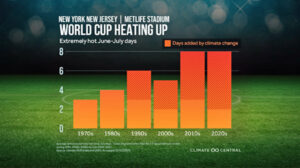
What will the weather bring for World Cup 2026 as it kicks off in venues across the United States? If the past few tournaments are any indicator, it will be hot – and extreme heat puts both athletes and spectators at risk for heat stroke, dehydration, and heart attacks.
Notable Video
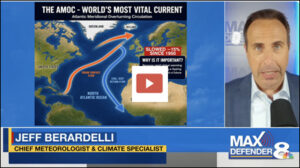
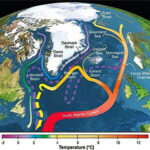
The circulation of our oceans is vitally important to our climate – but what happens if that system collapses? The Atlantic Meridional Overturning Circulation (AMOC) keeps Europe from becoming a frozen tundra and helps more southern regions receive the rainfall needed to grow crops. Meteorologist Jeff Berardelli explains a new study that shows a slowdown in the AMOC and explains why that matters for the health of the whole planet.