Dear Friends,
How hot is too hot? More of us are about to find out.
We are reaching temperature thresholds around the world – including in our own country – where even the healthiest humans couldn’t survive outside over an extended period. When it gets too hot and humid, our sweat can’t evaporate fast enough to cool us down, no matter how young or healthy we are.
Because of climate change, that kind of heat is happening more often and it impacts more than just our health – it lowers productivity, harms crops, dries up water resources, and supercharges hurricanes.
And countries are feeling the climate change bite to their economies – especially this year as El Niño amplifies disruptions. The unprecedented heatwaves in Europe this summer are projected to wipe out roughly $208B of GDP, essentially negating the EU’s expected economic growth.
Here in the U.S., we’re weathering an increasingly ironic scenario – even as we were enduring the hottest month ever recorded in the lower 48 (July), we’re embarking on the biggest natural gas buildout ever in order to power new data centers. Some of the AI generation is still speculative and may not be built, but the sheer number of proposed natural gas additions is so high we can be confident that much more natural gas will be used in the future – and that our emissions will climb significantly.
In the long term, this will lock in more climate damage. In the shorter term, this rapid increase in demand is expected to strain supply and send prices higher. So, as we turn on our air conditioners more often to beat the heat in the future, the costs of our electricity will spike even higher.
We are in for a rough patch. Our grid is modernizing too slowly to meet AI’s breathtakingly large electricity demands (one AI center purports to need power capacity equal to that of New York City). While data center operators say they’d rather plug into the grid than build their own gas plants on site – connecting to the grid would be cleaner and cheaper – our system is constrained by physical bottlenecks, outdated regulations, and politics. And, as you’ll read below, it’s not improving quickly.
So, let’s root for the new technologies, some outlined below, that can pave the way to a different, more sane, and affordable energy system. If we don’t, today’s hot temperatures will simply be a precursor to tomorrow’s hotter ones.
Sincerely,
Kathleen Biggins
Founder and President
Notable Quote
“El Niño is a giant hammer that the climate gets hit with, so it is going to scramble a lot of different things.”
– Zeke Hausfather, Berkeley Earth scientist
News of Concern
We’re barreling toward irrevocable shifts in our natural world – changes driven by our continued reliance on fossil fuels that we won’t be able to undo, even when we manage to curtail our emissions. A heartbreaking example: the wildfires raging across the west in our country are burning so hot that they are turning our great forests into stunted shrublands – and the trees that once thrived there won’t return. This will have far-reaching impacts, from a drier landscape with a scarcer water supply for both humans and wildlife to decreased carbon absorption, which means more heat-causing emissions escaping into our atmosphere.
In other concerning news:
■ China’s use of coal power is rising after a decade of decreases, as El Niño heat is straining the country’s hydropower facilities and the war with Iran has hindered imports of liquified natural gas. This is disheartening because China – the world’s biggest greenhouse gas emitter – had generated more electricity from renewables than coal for the first time last year.
■ On a good news/bad news note, batteries are transforming our grid – enabling us to use cheaper, cleaner energy for more parts of the day and providing more stability – but we aren’t getting them onto the system fast enough. Bottlenecks in building grid infrastructure, like transformers and switch plugs, have created a five-year wait before new projects can hook in. This is a big deal – there’s 750 gigawatts of storage (the equivalent of 700 nuclear plants) waiting to get connected.
■ Our electricity bills are soaring, and new research shows current federal energy policies curtailing renewables and supporting fossil fuels will both drive up emissions and make power even more expensive, with U.S. households potentially spending an extra $650 billion over the next 15 years.
■ In another bad news/good news story, the Trump administration announced new tariffs on solar components last month that will slow solar’s skyrocketing growth (it’s currently the fastest form of new generation in the country despite policy pullbacks) but will also shore up American manufacturers to protect supply chains in the future.
News of Hope
Fortunately, we continue to push the envelope on developing ways to tackle climate change. Cities and companies, large and small, are thinking outside the box and embracing clean energy. And climate scientists are persisting in their research and communication efforts even after the government scuttled their programs. A particularly bright note here is the nonprofit climate.us, created after the Trump administration shut down NOAA’s climate.gov.
There’s so much good news to share this month:
■ New York City is exploring opportunities to beat the heat, including a huge air-exchange system that could capture and store the sweltering heat of the summer subways for warming buildings in the winter and embracing apartment-sized home batteries that residents can plug their air conditioners into at peak times to reduce both their costs and the strain on the grid on extremely hot days.
■ Boston is also turning its attention to novel clean-power sources, testing three thermal-energy projects that would use its rivers for heating and cooling. Because water temperatures fluctuate less than air, the rivers could support efficient heat pump systems that proponents claim could supply a “near-infinite” source of energy in the future.
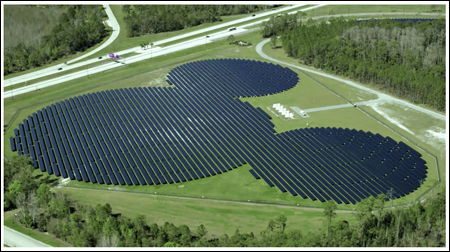
The “most magical place on Earth” has just pulled another rabbit from the hat. Disney World is now capable of powering its entire resort – including all of the parks and hotels – with 100% solar energy during daytime hours. Source: The Walt Disney Company
And there was more good news in June:
■ The UK and Google are working together in a landmark effort to evaluate if altitude adjustmentsfor planes flying over the Atlantic Ocean could lessen the aviation industry’s impact on the climate. “Operation Blue Skies” will analyze if the shifts can decrease contrails, which trap heat and contribute to global warming.
■ Wildfire survivors are some of our fiercest fighters in reducing our risk from these deadly disasters. They’re building companies and pouring hundreds of millions of dollars into creating technology to combat wildfires, from drones to tracking balloons to systems that disrupt the oxygen in a blaze.
■ Americans are flocking to heat pumps (which provide both heating and cooling) for their homes, with sales outpacingfossil fuel furnaces by 32% in the first quarter of the year and almost beating out AC units. Farmers are embracing heat pumps as well, with milk and cheese producers reporting heat pumps can cut electricity use in half.
■ A hearty cheer to this innovation – a Heineken brewery is replacing natural gas boilers with heat batteries for manufacturing some of its beers. The batteries use clean energy to generate high heat, which is stored in special bricks, then used to generate the clouds of steam necessary for brewing the beer.
Notable Graphic
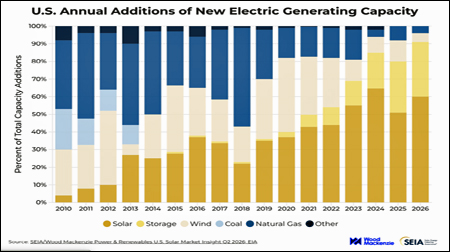
Growth of renewable power remains strong in the United States. Solar and storage made up 91% of all new energy generation capacity in the first quarter of 2026 (with solar accounting for 60%). Current federal policies that favor fossil fuels are slowing our momentum – growth was down 27% from last year. But even with these headwinds, solar is expected to continue to grow rapidly. Experts project it could surpass natural gas as the primary power generator around mid-century.
Notable Video
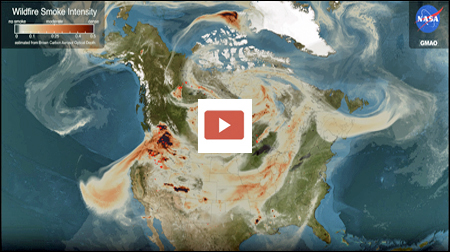
Wildfire smoke has engulfed swaths of the country this year, sometimes traveling for thousands of miles from the source of the blaze. It’s becoming a more-common occurrence as climate change heats the air, shifts rainfall patterns, and dries out land to create tinderbox conditions. This graphic visualization drives home the sheer scope of how the smoke travels through the air.