








A snapshot of our science

While the majority of Americans across party lines recognize climate change is happening, many do not understand how it will impact them directly and why there is urgency to address it. To help all of us understand why this is such an important issue, our nonpartisan program provides scientifically grounded answers to the questions many of us have about climate change. Here’s a preview of the science section of our Climate Primer and those questions!

How do we know climate change is real?

NASA Temperature Trend

Global temperature trends mapped by NASA show a sharp increase since the pre-industrial period. Every one of the last 10 years ranks among the top 10 hottest on record since the 1880s.

Indicators: Glaciers Melting and Retreating

These two pictures are of the Muir Glacier in Alaska, taken from the exact same place, same time of year—but about 60 years apart. The Muir glacier moved back about 7 miles and its thickness decreased by about ½ a mile.

Unlocking the Past

Using the discipline of paleo-climatology, scientists can pull up ice cores that are more than 800,000 years old. In those ice cores are little air pockets trapped by frozen snow. Scientists can analyze them for carbon levels, which also gives them a sense of temperature. We are in uncharted terriroty, at the hightest levels of carbon dioxide in our air in 800,000 years.

Indicators: Rising Seas

Global sea levels have risen by 8-9 inches since the 1880s. Satellite measurements show that most of that increase has come since the 1990s.

How do we know climate change is caused by humans?

Increase in CO₂ in the atmosphere since Industrial Revolution
50 %
Increase in ocean acidity since the Industrial Revolution
30 %
Sea level rise since the Industrial Revolution
8 "
Per-year increase use of fossil fuels since WWII
5 %

Scientists studying atmospheric chemistry can identify carbon from different sources, including plants – the basis of fossil fuels. As carbon dioxide concentrations in our atmoshere have increased sine the industrial period, the amount of carbon from plants has climbed disproportionately. Only the burning of fossil fuels accounts for this shift.

What is the scientific consensus?

Trusted experts

What are the dangers?

The 3 things Americans say are most important when they vote are: jobs and the economy, health and personal security, and geopolitical stability as experienced by refugee crisis, civil chaos, and terrorism. See the effects climate change. 

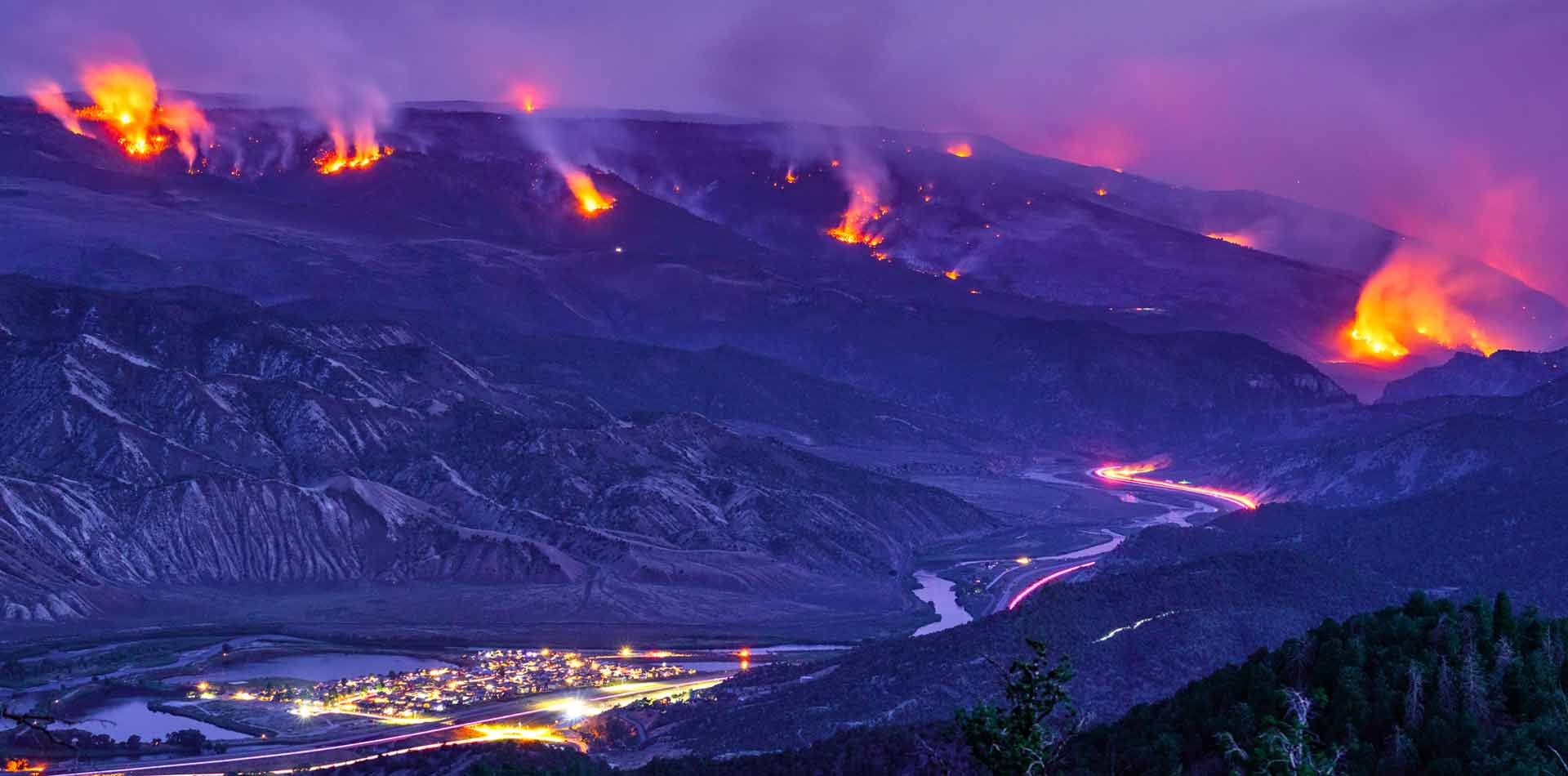
Wildfire seasons are longer across the U.S. since the 1970s. There are 60 more days of high-risk fire weather in parts of the Southwest. The planet's average surface temperature has risen about 2 degrees Fahrenheit since the late 19th century, a change driven largely by increased carbon dioxide and other human-made emissions into the atmosphere.
-NASA
Sea Levels are projected to rise 2 to 3 feet by 2100 Levels could rise up to 6 feet if ice sheets continue to destabilze. The acidity levels of ocean waters has increased by 30% since the beginning of the industrial revolution. This increase is the result of humans emitting more carbon dioxide into the atmosphere and hence more being absorbed into the ocean.
-NASA
Increase in Extreme Weather Events Scientific studies indicate that extreme weather events such as heat waves and large storms are likely to become more frequent or more intense with human-induced climate change.
-EPA

Is there hope?

Yes! Here are a few reasons why:

other-program-icon-economy

The economic equation has changed. The difficulty and cost of transitioning to cleaner technologies have come down from what they were 10 years ago, so we can look at the economic equation very differently. Studies show the U.S. could reach net-zero by 2050 with no significant increase in costs.

other-program-icon-investments

Financial institutions and businesses are demanding and driving climate action. The Federal Reserve called climate change a threat to the stability of our financial system.  Leading investor Larry Fink said, “climate risk is investment risk” and is pressuring companies to take climate action.

other-program-icon-agriculture

There is great power in nature to regenerate. Large-scale protection, restoration, and better land-management practices can help stabilize climate change, pulling almost a third of excess carbon dioxide out of the atmosphere. 

other-program-icon-global

Other countries are leading. 145 countries have set or are considering net-zero targets, covering almost 90% of the world's greenhouse gas emissions.

other-program-icon-energy

New technology is on the horizon. New technologies that reduce, capture, or repurpose greenhouse gas emissions or replace fossil fuel energy will cause a greater tech revolution than telecom in the 90s.

other-program-icon-usa-flag

The U.S. is less divided on this issue than we think. Americans as a whole are no longer divided on this issue, with policymakers from both sides of the aisle finding the political will to find common ground.
Stay Connected

Get the latest news on climate change and what inspires us delivered to your inbox. 

    Sign Up for News!