Updated February 14, 2026
The newly announced repeal of the 2009 Endangerment Finding leaves us greatly disheartened. For more than 15 years, this finding has laid out the scientific basis for limiting fossil-fuel pollution from cars, trucks, power plants, and other sources of the greenhouse gases that increasingly overheat our planet. Although EPA asserts that its action is based solely on its revised reading of the Clean Air Act – a narrow reading previously rejected by the Supreme Court – the result is in effect an abandonment of climate science.
The Endangerment Finding reflects an underlying promise between government and citizens: when there is a clear threat, the government will respond. Its repeal marks a retreat from that promise. Repealing it does not alter the physics of greenhouse gases or stop the rising costs of climate pollution. What it does instead is strip away the EPA’s ability to respond – and scientists, economists, businesses, and conservation organizations have expressed deep concern that this leaves the U.S. unprepared as harms accumulate.
This move sets into motion changes that will damage us for generations – it’s a loss to humanity and to our planet. The following blog, written in October 2025, provides a deeper understanding of the ramifications of this rollback on our climate.
Guardrails for a Warming World: The Fight Over the Endangerment Finding
by Nancy Ylvisaker
The Trump administration has threatened to roll back a crucial finding that determined that greenhouse gases endanger human health and can be regulated under the Clean Air Act. Issued in 2009, the Endangerment Finding gives the government the authority to regulate and limit power plant emissions and methane leaks and to set fuel-efficiency standards for automobiles. A rollback would have massive implications for climate regulations – and our safety.
In the following blog, author Nancy Ylvisaker details the risks inherent in rolling back the Endangerment Finding. A past board member for C-Change Conservations, Nancy is deeply engaged in conservation advocacy, serving on the boards of the Nature Conservancy in Missouri, Center for Plant Conservation, Coastal Mountains Land Trust, and the Conservation and Science Mission Council of the Missouri Botanical Garden. She is the current Conservation Chair of the Garden Club of America. Professionally, she worked in finance at J.P. Morgan and Merrill Lynch in NYC for many years.
In addition to sharing Nancy’s thoughtful blog, C-Change Conversations responded directly to the EPA, joining a wide range of health organizations and nonprofits that submitted public comments in opposition to rescinding the Endangerment Finding. Karen Florini, C-Change Conversation’s strategic advisor, wrote the official response outlining our position. You can read it here.
When parents imagine the future for their children, it’s often in everyday terms: clean air to breathe, safe water to drink, a stable world to inherit. In the United States, one of the most important legal tools designed to protect that future is something most people have never heard of – the Endangerment Finding.
Issued in 2009 by the Environmental Protection Agency (EPA), the Endangerment Finding declared that greenhouse gases (GHG) – including carbon dioxide, methane, and nitrous oxide – “endanger public health and welfare.” It arose from a Supreme Court case two years earlier (the landmark Massachusetts v. EPA case, 549 U.S. 497) in which the Supreme Court ruled that if greenhouse gases threaten the public, the EPA is obligated under the Clean Air Act to regulate them. The Endangerment Finding was the government’s formal acknowledgement that climate pollution meets that test.
For more than 15 years, the finding has served as the legal foundation of U.S. climate policy. It gave the federal government the authority to set climate pollution standards for cars and trucks, tighten limits on power plant emissions, and regulate methane leaks. In doing so, it helped push technological innovation, lower consumer costs, and reduce greenhouse gases, even as the population and economy grew.
Today, however, there is a push to demolish that foundation. In July 2025, EPA Administrator Lee Zeldin issued the agency’s proposal to repeal the Endangerment Finding. A Department of Energy (DOE) report released with the proposal argued that:
1. Reducing emissions in the U.S. would have little to no effect on global climate change.
2. The impacts of greenhouse gases are uncertain or far in the future.
3. Enforcing limits on emissions would cause economic harm.
4. Higher carbon dioxide levels might benefit agriculture.
5. It isn’t clear that climate change harms human health and welfare, or that the
harms aren’t outweighed by the benefits, and therefore the EPA doesn’t have the
authority to regulate greenhouse gas emissions.
Many scientists responded swiftly to the DOE report and the proposed repeal of the Endangerment Finding, saying the report misrepresented decades of research and that the harms of greenhouse gases – from health impacts to economic losses – are already evident and will grow exponentially as temperatures continue to rise. Further, arguing that cutting emissions in the U.S. won’t make a difference to global climate change ignores that the U.S. is the world’s second-largest annual emitter behind China and cumulatively has produced 70% more emissions than China, according to the EPA. And critically, supporters point to the Endangerment Finding’s success in bending emissions trends down while encouraging innovations that have benefited both consumers and industry.
What the Endangerment Finding has Achieved
With its mandate to reduce emissions, the EPA previously focused on the two top sources in the United States – transportation and electricity generation, which together account for about 55% of emissions (EPA’s GHG Inventory). Within a decade, new regulations made a difference. Since 2007, when emissions peaked in the U.S., to 2022, emissions have declined by 17.8% according to the Center for Climate & Energy Solutions, despite the population expanding by 10.5% and economic growth of 30.1% (Macrotrends).
A. Transportation: Gains at the Gas Pump, Profits to Corporate Bottom Lines
After the Endangerment Finding was instituted, the EPA and the National Highway Traffic Safety Administration tightened Corporate Average Fuel Economy (CAFE) standards and set GHG emissions for new cars and light trucks. Automakers responded with more efficient engines, hybrid systems, better aerodynamics, and lighter materials. The results were dramatic:
● New vehicle emissions fell by 40%. Whileartially offset by Americans’ turn to SUVs and trucks, emissions still remained 30% lower.
● Average fuel economy rose from just under 20 MPG in the early 2000s to 25 MPG
even with the SUV boom.
Analysts estimated drivers would save $6,000 to $8,000 in fuel costs over a car’s lifetime – hundreds of billions of dollars when measured across the American fleet, many times more than compliance costs, which were pegged by the EPA at $1,000 to $1,800 per vehicle.
Nor did cleaner cars mean weaker car companies. The industry innovated and adapted, and even under the tougher rules, and the pandemic in 2020-2021, automakers have continued to thrive.
B. Energy Generation: Lowering Smokestack Pollution
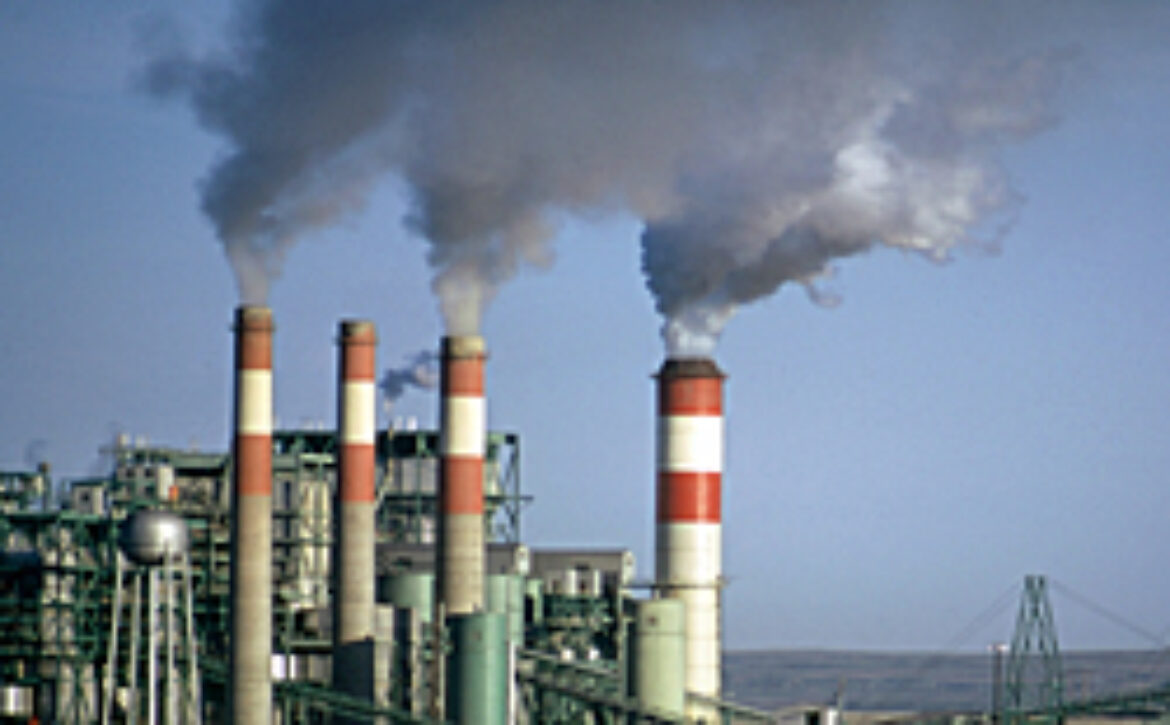
The electricity sector tells a similar story. Since 2005, power plant CO2 emissions have fallen by a third, even as the grid has worked to keep pace with higher consumer demand and a digital economy hungry for electrons. Nor has there been sticker shock from cleaner air: according to the EPA, electricity prices closely tracked inflation through 2024 (although that changed in 2025 with large natural gas exports and AI growth).
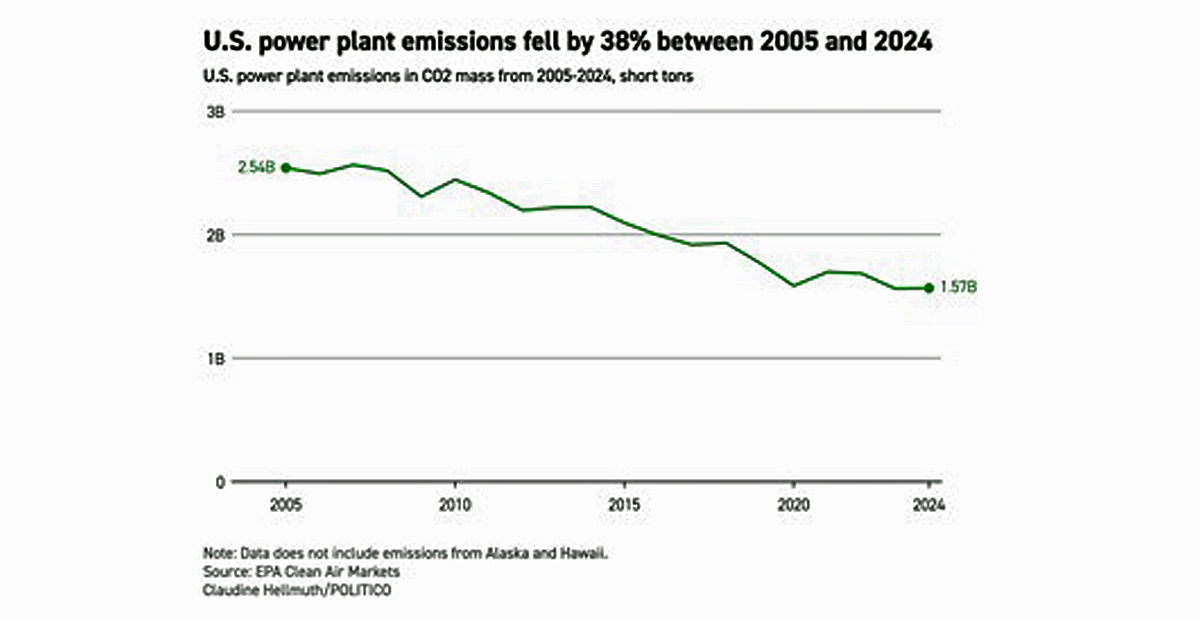
Source: EPA
Clean Energy: A Competitor for the Record Books
The Endangerment Finding rules have also worked in favor of clean energy. Fifteen years ago, skeptics could plausibly wonder whether wind and solar would ever compete on cost. That debate is over. The cost of new onshore wind and utility solar has fallen by more than 70% and 90% respectively in 20 years, and according to Lazard, they are now the most cost-effective forms of new-build energy generation on an unsubsidized basis (i.e., without tax subsidies).
And the grid itself is evolving. Grid-scale battery storage, nearly absent a decade ago, is now firming solar output in the afternoon and pushing clean power into the evening peak. According to IRENA, the International Renewable Energy Agency, in 2024 90% of new power capacity was coming from renewable sources. Utilities have learned that a cleaner grid is not an unreliable grid; it is a different grid – more digital, more efficient and flexible, incorporating advanced forecasting, sophisticated demand response, and local networks. And with AI’s sophisticated, almost instant ability to manage information comes the potential for almost seamless integration of energy sources, whether gas, solar, hydro, oil, or wind.
The New Energy Reality: It All Works Together
Tighter standards have not strangled the American energy sector as some have feared. U.S. oil and gas production reached record levels even as vehicle and power plant rules tightened since greenhouse gas standards for methane emissions were put into place in
2016. According to the U.S. Energy Information Administration, U.S. gas production has increased by more than 40% (EIA Dry Natural Gas Production) and oil production by just below 50% (U.S. EIA Field Production, Crude Oil.) And oil and gas companies have continued to post strong profits. While there were large declines in 2014-2015 due to the OPEC shale supply war, and in 2020 due to COVID, profits rebounded hugely, normalizing in 2023 and 2024. Profitability remains above historic averages, and in 2024 alone, profits of the five largest oil companies in the U.S. exceeded $75 billion.
The Costs of Delay: Billion-Dollar Disasters
Endangerment Finding regulations are framed by some as a choice between costs now weighed against uncertain benefits later. But the cost-benefit ledger is already unbalanced, and becoming more so as clean energy surges, helping lower emissions.
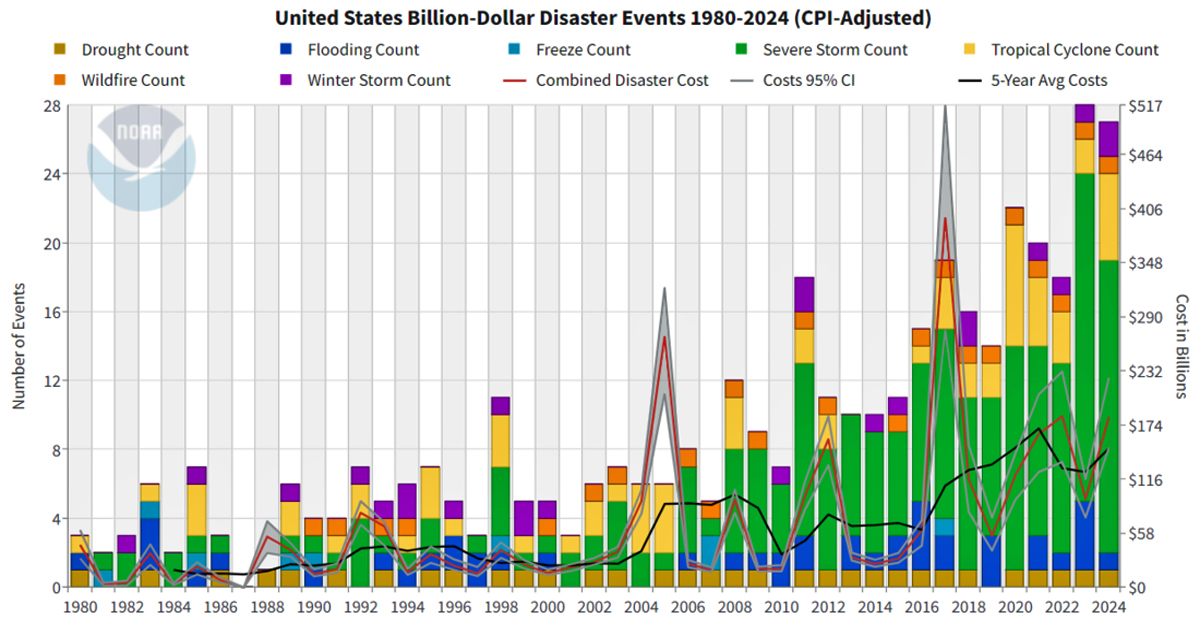
Insurance Markets, Priced to Risk, are Flashing Red
Insurance markets reflect the scale of increasing costs. In markets exposed to growing risks of fire, floods, and drought, premiums have jumped steeply. After the January 2025 Los Angeles County fires, State Farm reported $1 billion in payouts and received a 17% rate hike; Allstate, a 34% hike (CA Dept. of Insurance 2025). In Colorado, the average insurance premium increased by 60% between 2017 and 2023. In some places, major carriers have simply stopped writing new policies altogether.
As noted by Federal Reserve Chairman Jerome Powell in February 2025, banks and insurance companies are “pulling out of coastal areas, areas where there are a lot of fires… So what that’s going to mean is if you fast-forward 10 or 15 years, there are going to be regions of the country where you can’t get a mortgage.”
According to scientists, insurers, and economists, if we do not continue to reduce greenhouse gases, projected losses and costs will be multiples of what we see today.
Threat to our Food System and our Security
Among the arguments for repeal of the Endangerment Finding is that CO2 enhances plant growth, so higher emissions would increase agricultural output. It’s accurate that CO2 is used to stimulate plant growth in greenhouses, and modest increases in CO2 appear to stimulate growth of some food crops under ideal conditions. But higher CO2 levels also decrease protein and nutrient content in most grains and any benefits of yield increases are overwhelmed by severe heat, drought, and irregular rainfall. Corn, the nation’s most valuable crop, cannot germinate if soils are too hot – earlier and longer heat waves are already cutting into yields.
Cornell University estimates that global warming has decreased agricultural yields by 20% since 1961. The U.S. “breadbasket” states, which produce a third of the world’s corn and soybeans, will face even greater harvest losses by mid-century, and global yields could decrease up to 24% by 2100, according to a study in Nature.
Food and water insecurity will become a national security issue as well, sparking conflict and refugee crises. Former Department Of Defense Secretary James Mattis in 2021 stated: “Climate change is impacting stability in areas of the world where our troops are operating today.”
Our oceans, too, tell a cautionary tale. They have absorbed more than 90% of excess heat, and are now warmer and more acidic than at any time in modern history. Coral reefs – nurseries for a third of the ocean’s fish – are bleaching at record rates, 50% of oxygen-producing kelp forests have disappeared, and algal blooms create massive dead zones for fish. Seas that are 8-9 inches higher than 140 years ago are pushing tides further inland, threatening ports, bases, and neighborhoods. Saltwater intrusion from rising tides also compromises groundwater and agriculture.
Health Consequences that Hit Close to Home
Scientists and physicians say health burdens stemming from GHG emissions are profound and rising. While not a greenhouse gas, up to 25% of air pollution’s particulate matter (PM) is composed of black carbon, which is produced by incomplete combustion of GHG. The fine particulate matter generated by burning fossil fuels (PM 2.5), is especially dangerous to human health because it lodges deep in the lungs, causing irreversible damage. The World Health Organization (WHO) estimates that air pollution claims more than four million lives a year.
Heat adds another burden. The Lancet, a major medical journal, estimates extreme heat contributes to almost half a million deaths annually, a toll projected to triple by mid-century. Vector-borne diseases – dengue, malaria, and West Nile – have all moved northward in the United States. By 2080, The Lancet’s Countdown on Health and Climate estimates that 60% of the global population could be vulnerable.
The Economy-Wide Toll
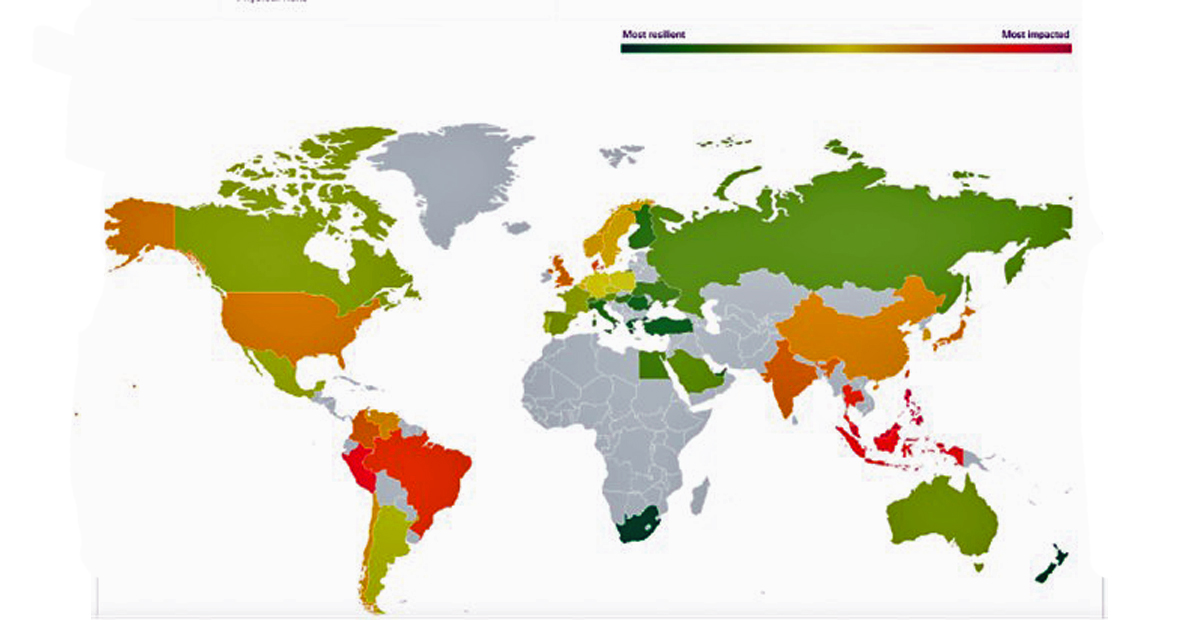
Experts warn that these impacts will threaten economic prosperity. Insurer Swiss Re projected U.S. GDP losses of up to 18% by 2050. BlackRock and the Rhodium Group estimated that without action on emissions, global output could fall by 25% in the second half of this century. These forecasts include reduced labor productivity, storm losses, higher health costs, and damage to infrastructure. For investors and insurers, climate change is not a distant problem but a systemic risk already shaping markets.
Swiss Re’s Projection of Impact of Drought on Global Productivity
Source: Swiss Re
The Endangerment Finding has become a symbol in a polarized debate, but it was designed by Congress as a practical tool. Supporters argue that it has worked: emissions are down, technology has advanced, industries have adapted, and consumers have saved money. Critics contend that it imposes costs and extends environmental law beyond its original intent.
The choice before policymakers is whether to maintain the guardrails or remove them. Repealing the Endangerment Finding would not alter the physics of greenhouse gases, or stop the rising costs of emissions. What it would do is strip away the EPA’s ability to respond. Scientists and conservation organizations argue this will leave the country unprepared as harms accumulate.
The Endangerment Finding will not solve all of our climate ills. But it reflects an underlying promise between government and citizens: when there is a clear threat, the government will respond. Its repeal would mark a retreat from that promise. The decision now rests with policymakers – what they choose will shape not only the trajectory of U.S. regulatory and climate policy, but the health, security, and prosperity of future generations.